Materials Guide

Natural Tropical Materials Guide

A practical guide to the natural materials that work beautifully in humid tropical homes, from teak and limewash to clay brick, terracotta, reed, and stone.

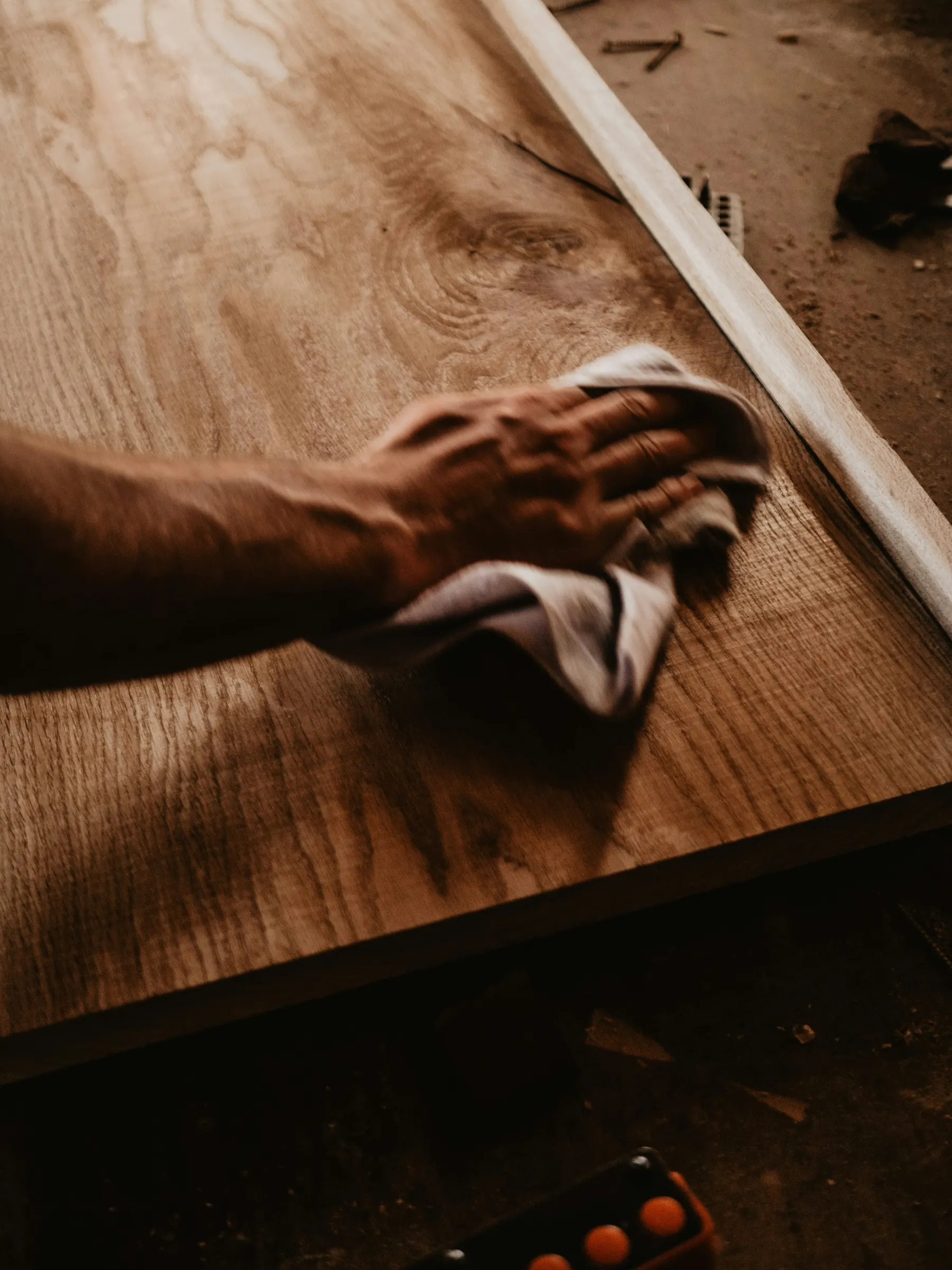
Teak wood being finished by hand, showing warm grain and natural character for tropical interiors
Natural materials perform best in the tropics when they are chosen for breathability, shade, durability, and the way they age.

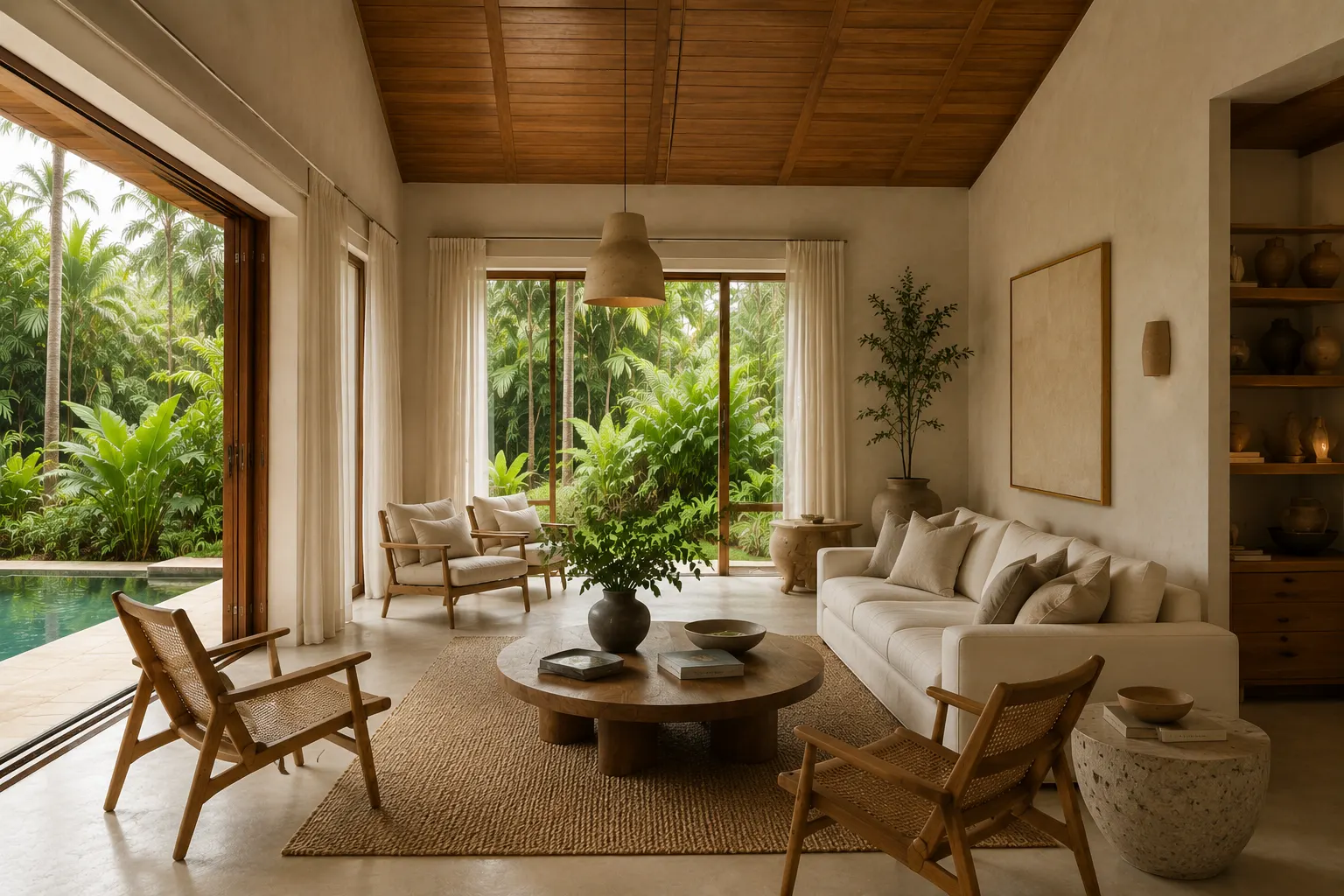
Working in a tropical environment calls for an entirely different formula. What works in other climates often won't hold up in humid, tropical conditions. Here, building well means putting the wellbeing and comfort of the people who live in the space first. It goes beyond aesthetics, yet when the right natural materials are chosen and combined, they bring the most harmonious space to life.

Airflow and breathable materials are essential in a tropical home. Used incorrectly, or in a space that can't ventilate, the same materials can work against you. Mould takes hold almost instantly when poor airflow meets the wrong surface. This is why tropical minimalism is more than an aesthetic. With light and air kept firmly in mind, materials carry the space, deciding not just how it looks, but how it feels to live in and how long it lasts.

Below, we look at the most commonly used and reliable materials for the tropics, and exactly how and where to use each one.

Timber

Teak

Teak-framed tropical window opening toward lush greenery and filtered daylight Warm teak wood grain being polished by hand to reveal its honey-brown colour

What it is and where it's from

Teak is one of the most reliable timbers for a tropical climate, which makes sense, since it comes from the tropics itself. Native to South and Southeast Asia, including India, Myanmar, Thailand, and Indonesia, it grew up in the same heat and monsoon humidity it's now asked to withstand. What sets it apart sits inside the wood: natural oils that make it resistant to water, rot, and insects, so it holds its form and beauty in conditions where lesser timbers warp, swell, or rot.

Colour and character

Teak carries a beautiful honey-brown tone with subtle grain that lends warmth to a space, ideal for a tropical minimal home, along with the occasional knot, a natural characteristic of the wood. Left to weather outdoors, that honey colour gradually settles into a soft silver-grey. A light oiling brings back and holds the original warmth if you prefer it.

Where to use it

Indoors, teak is a natural fit for architraves, window frames, doors and windows, and furniture of all kinds, anywhere the wood needs to stay stable and look warm.

It's just as at home outdoors. Because of its natural oils, teak handles direct sun and rain better than almost any other timber, which makes it a classic choice for sunbeds, garden furniture, and gates. For pieces fully exposed to the elements, a regular water-sealing coat is all it takes to keep them looking fresh and hold the colour; left untreated, they'll simply weather to that silver-grey patina without losing any strength.

The one thing that matters most: drying

Teak must be fully dried before it's used. There's a saying that even after the tree is cut, the wood still lives, and it's true. Timber constantly takes on and releases moisture from the air, expanding and shrinking as it goes, and teak is no exception. If it isn't dried properly, it will keep moving after it's built, warping and changing shape until a door no longer closes or a piece of furniture can't be used comfortably.

Dried correctly and crafted with care, though, teak is extraordinarily long-lived, the reason so many heirloom and vintage pieces remain solid and beautiful after centuries of use.

Plaster

Limewash

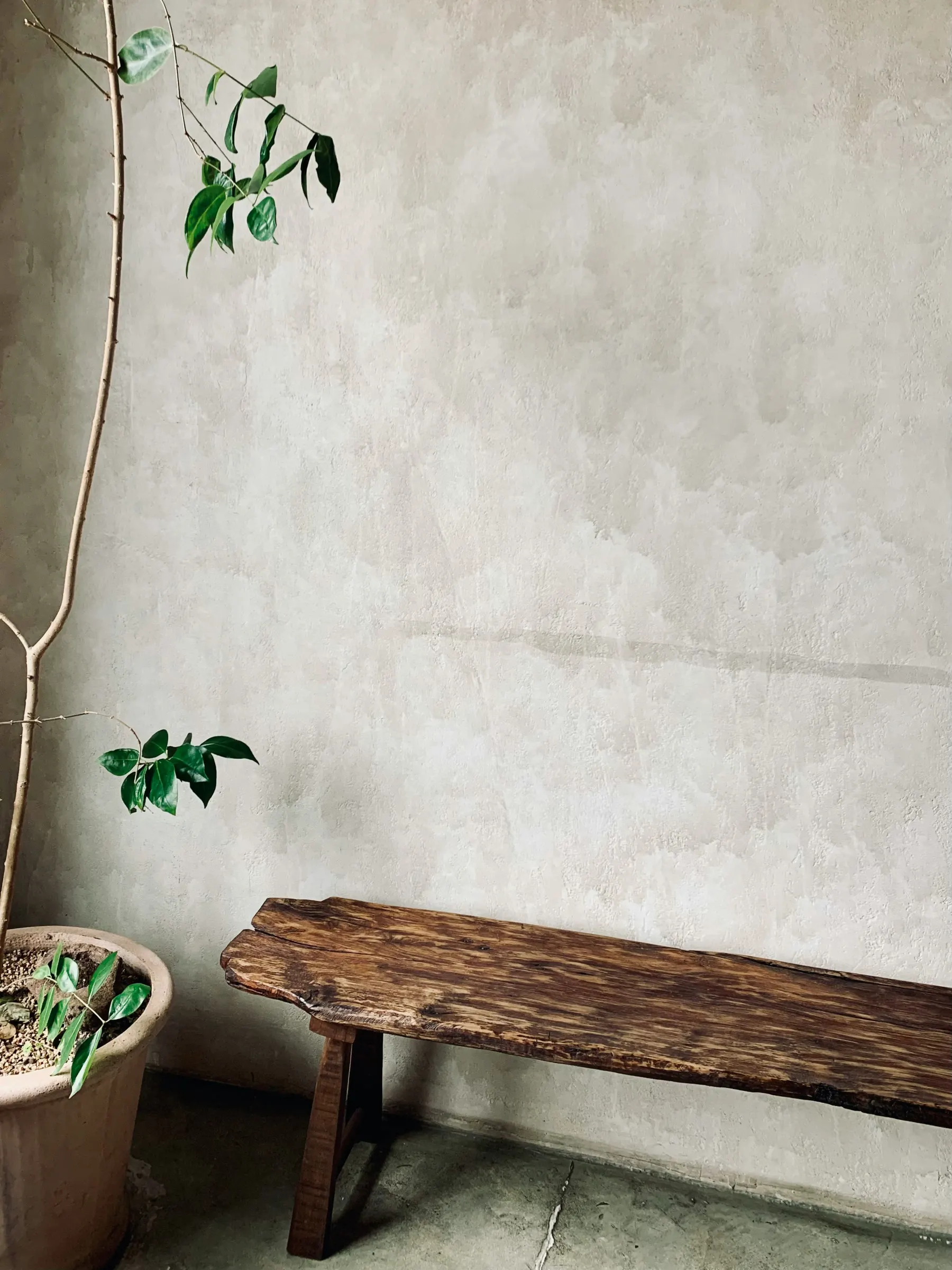
Soft limewash plaster texture with a breathable mineral surface Limewashed wall catching soft tropical light and showing subtle tonal movement

What it is

Limewash is one of the oldest ways of finishing a wall, and one of the best suited to the tropics. It's made by firing a calcium-rich raw material such as limestone, coral, or shells, then slaking the result with water and mixing it with sand to form a workable plaster. Traditionally these finishes were rarely purely mineral; alongside the sand and water, natural additives were often worked in to improve workability, durability, and water resistance, a reminder that limewash was a refined, climate-wise craft long before modern renders existed.

In countries like Sri Lanka, lime plaster was more than a finish. It was a way of building with the climate in mind: soft, mineral, cooling to the eye, and able to take on moisture without sealing the wall shut.

Colour and character

A limewashed wall has depth without decoration, texture without visual noise. It carries a soft, cloudy, layered quality, slightly imperfect in the most pleasing way. That look comes from the way it's made: brushed on in thin coats, each one absorbing a little differently depending on the wall beneath, the dilution, the movement of the brush, the humidity, and the drying time. The result is a surface that feels alive and hand-made without needing any pattern or ornament to carry it.

It also moves with its surroundings. A limewashed wall can read slightly differently through the day or across the seasons; where the wall holds more moisture, the colour may deepen or grow more mottled. This isn't a flaw. It's the material's character. Lime shows the condition of the wall behind it rather than hiding everything under a perfect, sealed film.

Where to use it

Limewash is an ideal backdrop a tropical minimal home is built around. It works beautifully with timber, stone, rattan, clay tiles, old doors, antiques, garden views, and filtered tropical light, letting a room feel finished without ever feeling over-designed. It belongs on interior walls and sheltered exterior surfaces, anywhere you want a soft, breathable, cooling plane to set warmer natural materials against.

What makes it work in the tropics

The beauty of limewash walls is partly technical. Lime is breathable and softer than cement, and it manages moisture gently, taking damp on and releasing it again rather than trapping it, which is why conservation bodies describe lime finishes as letting a building breathe. In a humid climate, that breathability is exactly what keeps a wall healthy.

Fresh lime is also naturally high in alkalinity, which is why it has long been valued as a hygienic finish: its high pH makes it naturally resistant to mould and bacteria when fresh. This property gradually mellows as the plaster carbonates and ages, but the breathability, the quality that matters most in the tropics, stays with the wall for its lifetime.

Brick

Clay Brick

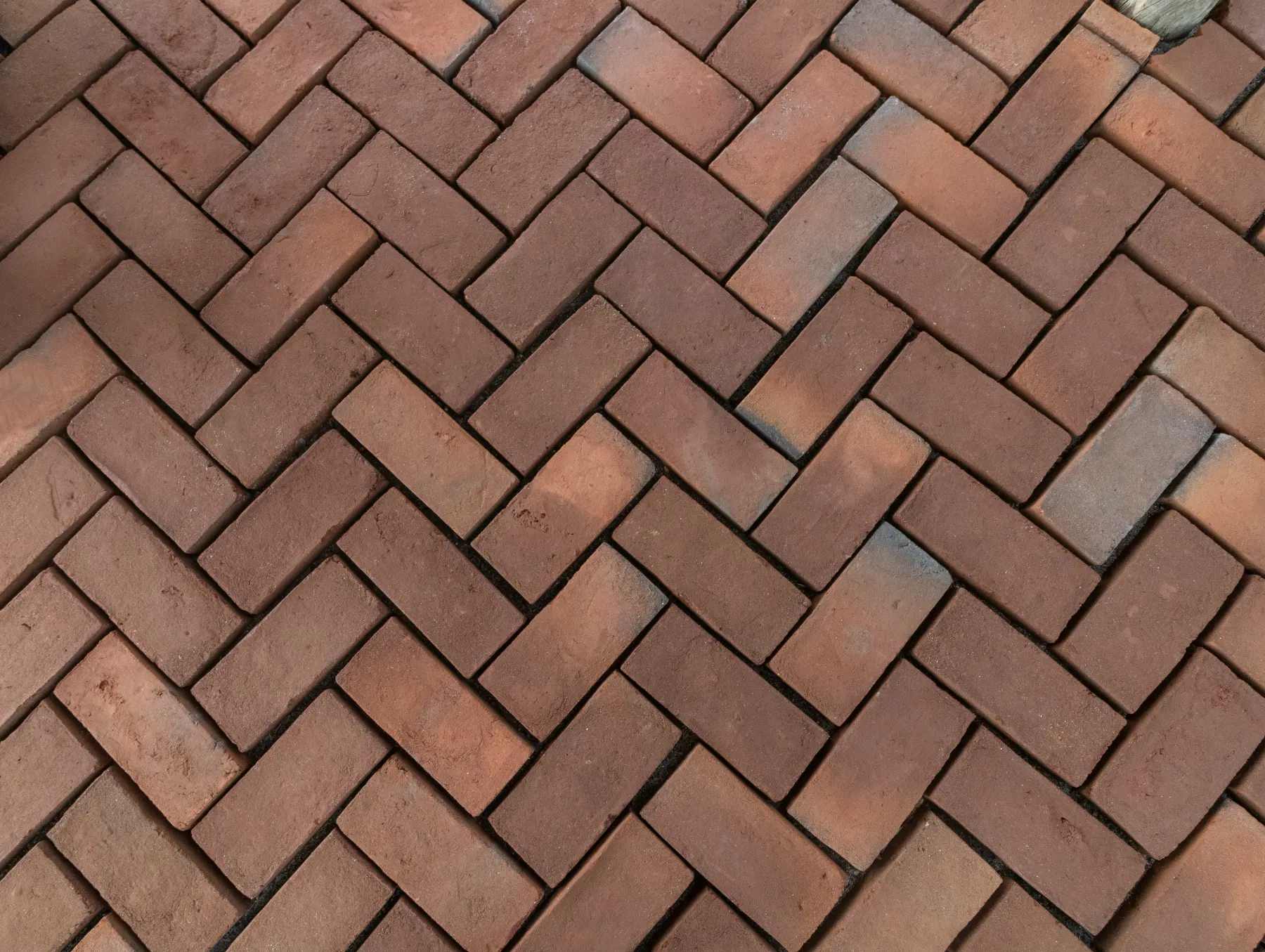
Traditional red clay bricks with natural terracotta, rust, and burnt-sienna colour variation
Brick brings structure, colour, texture, and thermal mass through the material itself.

What it is and where it's from

Traditional red brick is made from clay-rich earth, usually dug from local deposits. The earth is cleaned of stones and organic matter, then often left exposed to weather and soften before it's broken down, mixed with water, and kneaded into a workable body. Sand or fine grit is blended in to control shrinkage and reduce cracking.

The wet clay is then formed into bricks, by hand in timber moulds, by pressing, or by extrusion in more industrial production, and left as green bricks to dry slowly. That slow drying matters: trapped water turns to steam in the kiln and cracks the brick. Only once they're dry are they fired, and firing is what turns soft clay into a hard, permanent ceramic.

Colour and character

Brick's colour comes from the clay itself, not from any coating, which is why it never looks painted on and never wears off. The tone is born in the kiln: when iron-bearing clay is fired in an oxygen-rich kiln, the iron oxidises and produces the familiar red, orange, terracotta, and burnt-sienna tones, with higher iron content pushing toward a deeper red. The exact shade depends on the clay's chemistry, the firing temperature, the oxygen in the kiln, and how evenly the bricks fire.

This is why traditional brick is rarely one flat colour. A single batch can carry soft pink, orange, rust, deep red, brown, smoky purple, and blackened edges all at once, variation that's part of the firing, especially in traditional kilns. The surface is naturally textured too: even a simple shape holds the marks of clay, mould, sand, fire, and handling. And brick ages well, developing a patina rather than simply looking worn.

Where to use it

Red brick is strong, dense, and durable. It carries load, resists weather, and lasts for generations when it's made and detailed well. That makes it as much a structural material as a decorative one: exterior and interior walls, facades, columns, garden walls, and paving all sit comfortably in brick. In a tropical minimal home its real gift is that a brick wall arrives finished. It brings colour, texture, and depth through the material itself, so there's no need for pattern, wallpaper, or added decoration. The variation is already in the wall.

What makes it work in the tropics

Brick's advantage in the heat is thermal mass. Like concrete and tile, it's a high-thermal-mass material: it absorbs heat slowly, holds it, and releases it later rather than letting a room's temperature spike the moment the sun hits. Through the hottest part of the day, a brick wall draws heat in instead of passing it straight through, helping interiors stay cooler and steadier.

It's also porous, able to take on and release moisture depending on the brick and the mortar used, a breathable quality, like limewash, that suits a humid climate far better than a sealed, impermeable surface. Strength from the firing, depth of colour that's integral rather than applied, the cooling effect of thermal mass, and the way it patinas instead of degrading: together these are why brick remains one of the most dependable materials you can build with in the tropics.

Tile

Terracotta

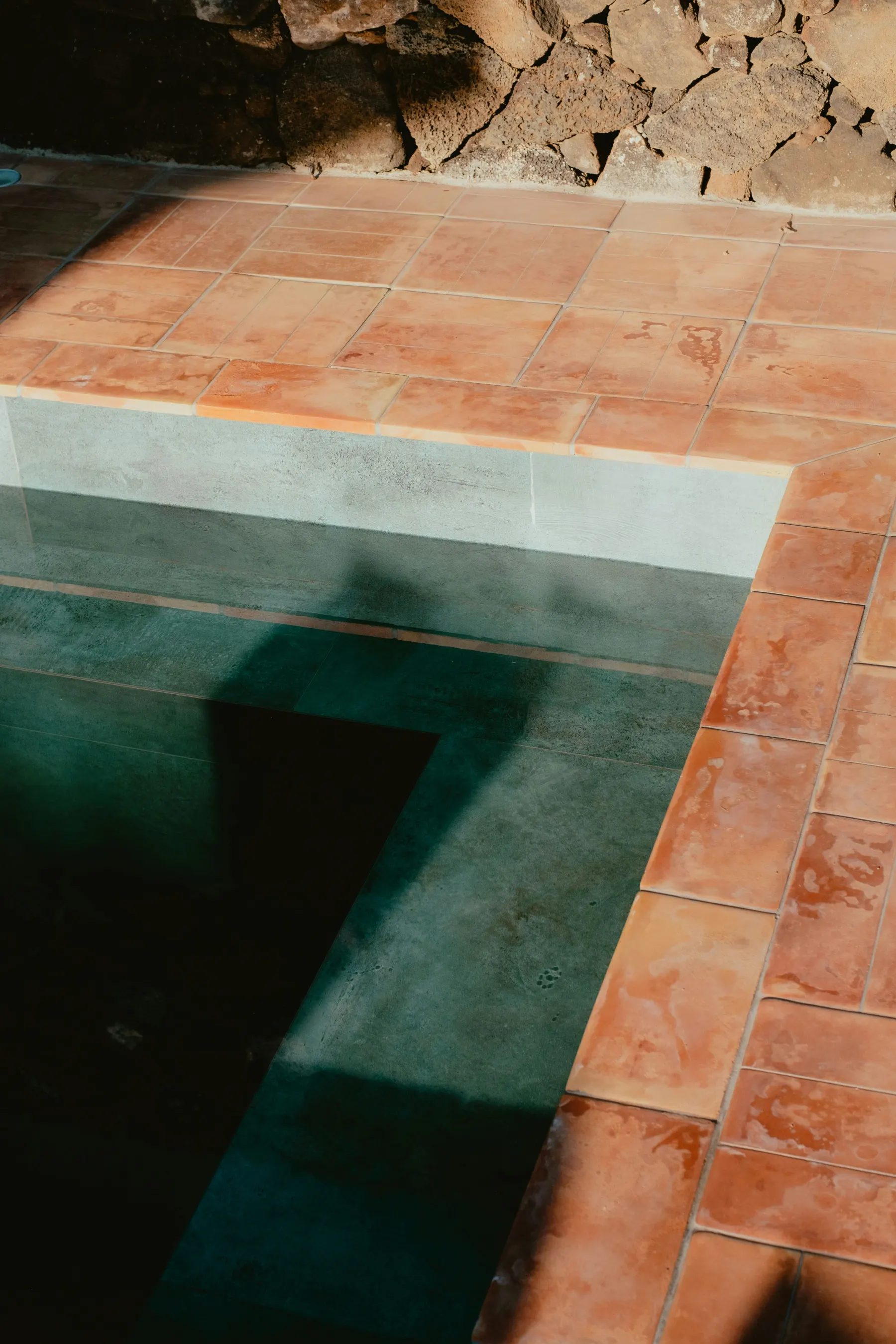
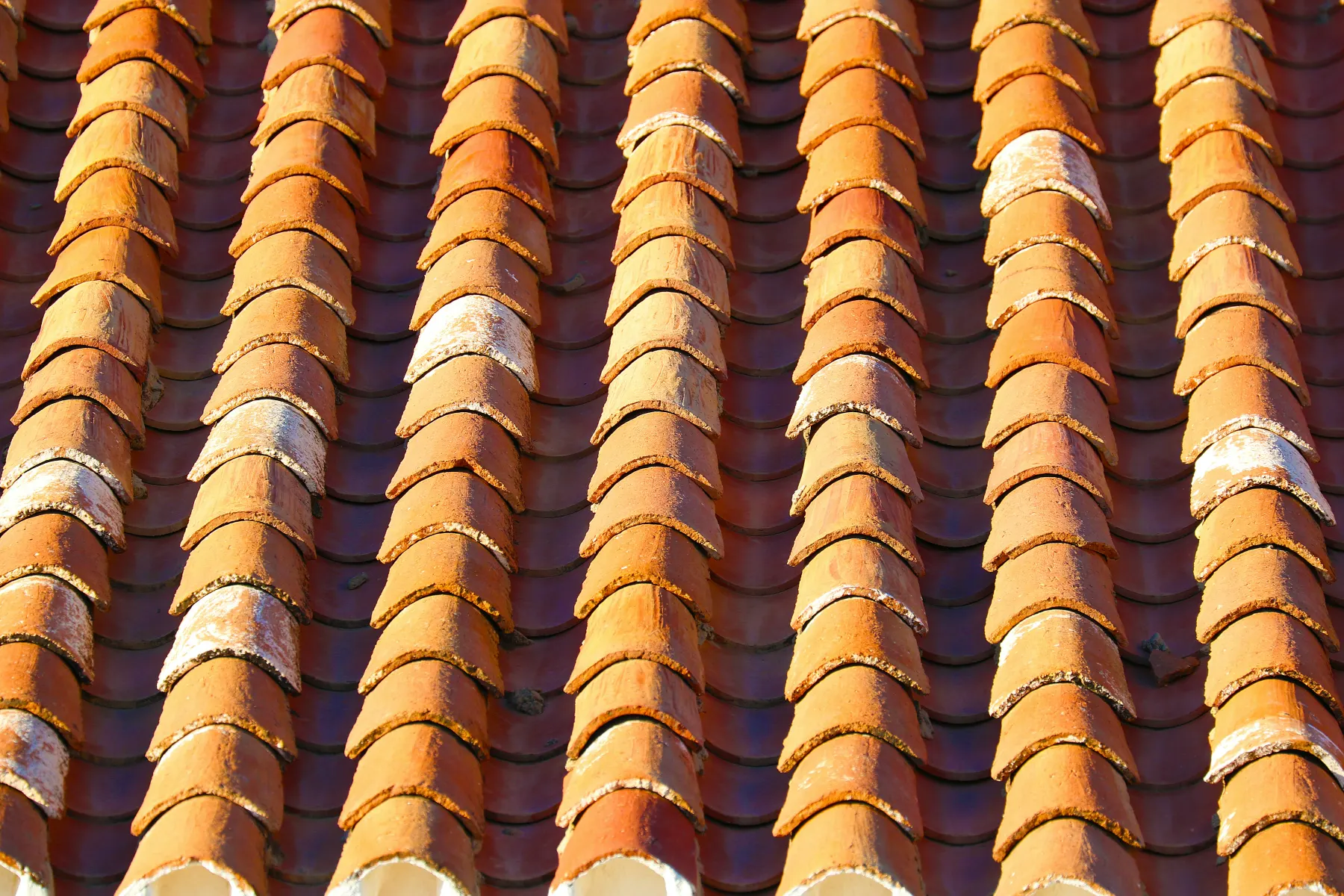
Terracotta floor tiles with earthy colour variation and handmade surface texture Terracotta roof tiles shaped to create shade, airflow, and heat dissipation in tropical homes

What it is and where it's from

Terracotta is earth made permanent by fire. Clay is dug from the ground, mixed with water, shaped by hand, mould, or machine, dried slowly, and fired until it's hard enough to shelter, floor, shade, or cool a house. The name means baked earth, and that's exactly what it is: one of the oldest building materials there is, made from the soil underfoot and turned to ceramic in the kiln.

Colour and character

Terracotta's colour isn't applied afterwards; it comes from the clay itself, as iron and other minerals turn to rust, red, orange, pink, brown, and deep burnt earth in the firing. Because the tone is born in the kiln rather than painted on, it never wears off and never looks artificial.

This is why terracotta never feels perfectly uniform. One tile may be pale and powdery, another deeper and more fired, another marked by smoke, sand, or the hand that shaped it. Those small differences are what give the material its depth. Terracotta doesn't need pattern to feel alive. Its surface already carries the memory of soil, water, air, and heat.

Where to use it

In a tropical home, terracotta is remarkably versatile: roof tiles, floor tiles, screens, pots, and wall elements all sit naturally in it. It belongs in a tropical-minimal palette because it gives warmth without excess, colour without paint, texture without ornament, usefulness without looking engineered. Like lime, timber, stone, and woven fibre, it's simple but never plain: a material that does its work quietly, through weight, shadow, breathability, and time.

What makes it work in the tropics

Terracotta is more than a beautiful colour. It's a material with climate intelligence. Its weight slows the movement of heat through the day, and its porosity lets it absorb and release moisture rather than sealing the surface shut. Put to work alongside shade, air movement, deep eaves, and open planning, it actively helps soften the heat.

The form does real work too. Curved roof tiles create small pockets of air beneath them, letting heat dissipate before it reaches the rooms below. And because the clay is porous, terracotta can cool through evaporation. As water passes through its surface and dries into the air, it carries heat away with it. Weight, shadow, and breathability working together: that's why terracotta has shaded and cooled tropical homes for centuries.

Fibre

Reed

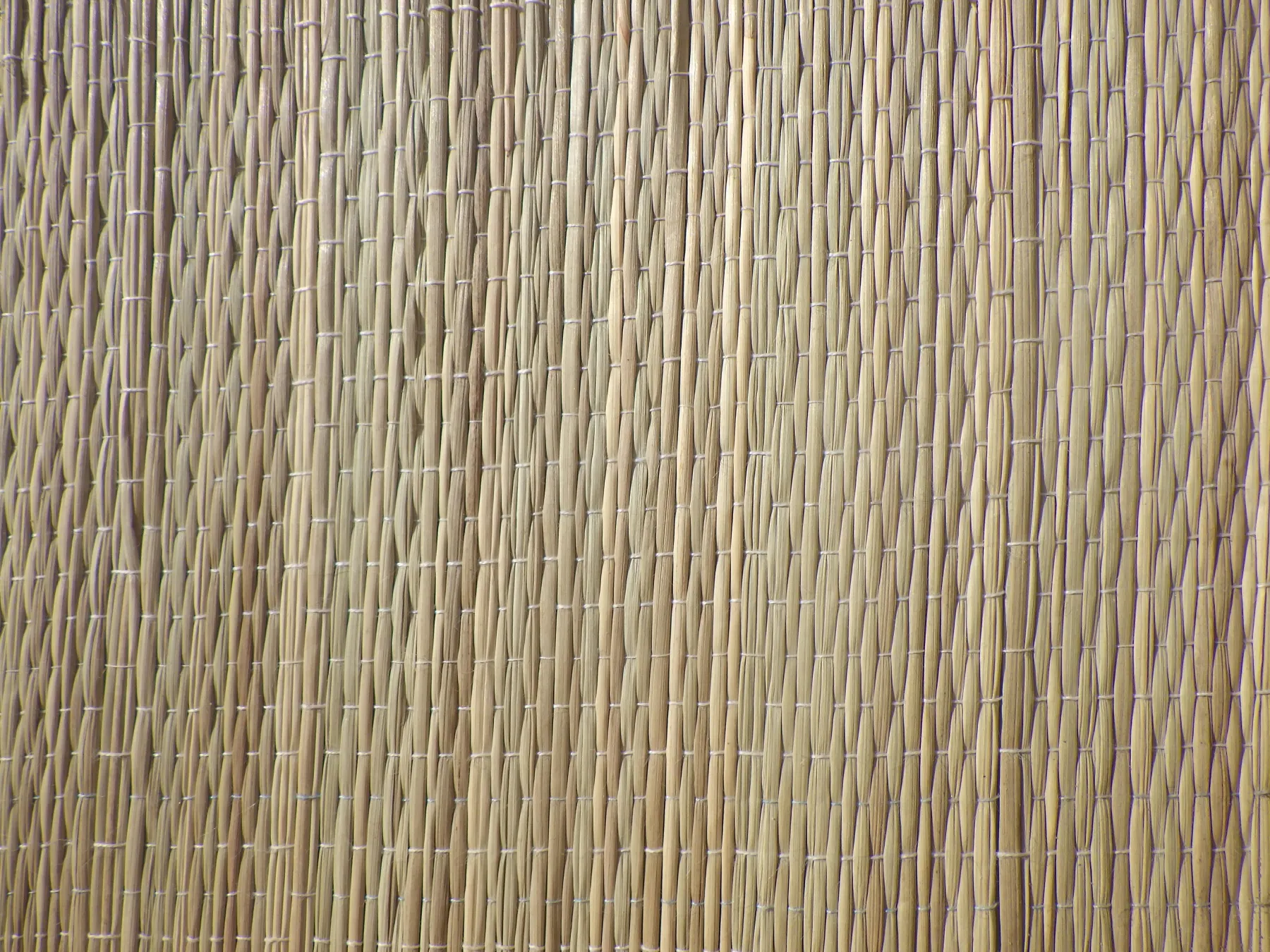
A woven reed screen filtering tropical light while allowing airflow
Reed edits tropical light: softening glare, allowing airflow, and adding quiet texture.

What it is and where it's from

Reed is one of the simplest natural materials in the tropical palette: slim, dried stems woven or laid together into screens, blinds, ceiling layers, and panels. It's lightweight, fast-growing, and breathable, which is exactly what makes it so well suited to a hot, humid climate. Rather than sealing a building shut, it filters and softens what passes through it. Used well, it's both a practical climate device and a quiet piece of craft.

Colour and character

Reed's colour sits between straw, honey, beige, and muted brown: warm, natural, and easy to live with. Its fine, repeated lines create a gentle rhythm without ever becoming obviously decorative. That combination of soft tone and quiet pattern is what lets it pair so effortlessly with limewashed walls, red brick, terracotta floors, timber furniture, linen, stone, and garden views. It adds warmth without clutter and texture without pulling attention away from the architecture.

Where to use it

Reed is versatile across a tropical home. As a ceiling below a ventilated roof, it makes a room feel warmer, more intimate, and more connected to craft, while keeping the overall space minimal. As a screen across an opening, it filters light beautifully, casting delicate shadows that shift through the day. And on cabinet fronts, wall panels, lampshades, or sliding partitions, it adds texture without visual heaviness.

It earns its place in the quieter problems too, making a large room feel less bare, a corridor less hard, or a veranda more considered, all without adding colour, pattern, or unnecessary objects. Set against rooms shaped by stone, lime, timber, or concrete, reed brings the softness those materials lack.

What makes it work in the tropics

Reed's value is that it works with shade and ventilation rather than against them. It softens glare, breaks direct sun, reduces radiant heat, and lets air pass straight through when used as a screen or ceiling layer. Its cooling power comes from a simple combination: trapped air, shade, thickness, and breathability. Placed under deep eaves, above verandahs, across openings, or as a ceiling beneath a ventilated roof, it helps keep interiors cooler without making them feel heavy or closed in.

It also has a particular relationship with tropical light: it doesn't block light, it edits it. Harsh sun turns softer, views become more layered, and the boundary between inside and outside feels less abrupt. That's what makes reed both practical and sensory. It cools, shades, filters, and softens, while giving the eye something natural to rest on.

Stone

Natural Stone

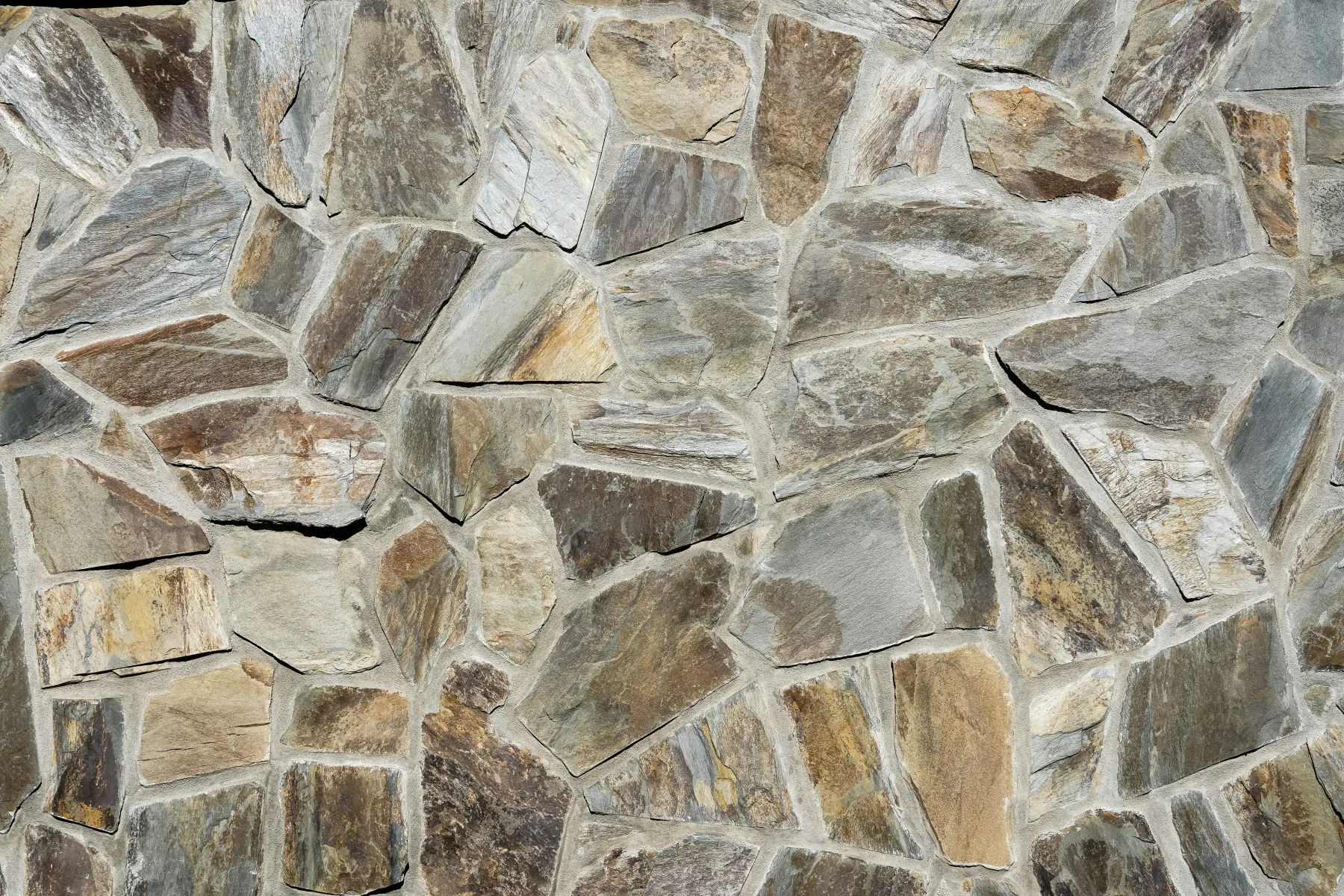
Natural stone wall texture with varied mineral colour, irregular shapes, and tactile surface depth
Stone works best in the tropics when it is protected from harsh sun and paired with shade, planting, and moving air.

What it is and where it's from

Granite, the most common in tropical building, begins deep within the earth as molten material that cools slowly into a hard, crystalline rock. Minerals such as quartz, feldspar, and mica give it its strength, grain, and colour. Once quarried, the blocks are cut into slabs, tiles, steps, counters, basins, and wall pieces, then finished according to how they'll be used.

Colour and character

Its colour isn't painted, its pattern isn't printed; the specks, veins, crystals, and tonal shifts are part of the rock itself. Granite alone ranges from pale grey and cream to black, red, pink, brown, and green.

The finish then decides how the stone meets the light. Polished granite reflects; a honed surface softens; brushed, flamed, or rough-cut stone catches shadow. The same slab can read sleek and cool or earthy and tactile depending entirely on how it's finished, a quiet but powerful way to tune the material to a space.

For a tropical-minimal home, stone is often at its best with the least done to it. Left honed, brushed, or close to its natural cut rather than highly polished, it keeps its raw texture and matte depth. The surface stays tactile, grounded, and quietly imperfect instead of glossy and engineered. A high polish can look refined, but it also reads as more formal and reflective; the unpolished face holds shadow, shows the grain honestly, and sits more comfortably beside lime plaster, timber, and reed. Less processing lets the material simply be what it is, which is exactly the point in a minimal space.

Where to use it

Stone earns its place wherever a room needs grounding: shaded floors, thick walls, verandahs, steps, plinths, thresholds, counters, and basins. In a tropical-minimal interior it brings richness without clutter, pattern without decoration, colour without paint, permanence without heaviness when it's used with care. Set beside lime plaster, timber, reed, terracotta, linen, and garden views, stone becomes the cool mineral counterpoint, a reminder that a house can be simple and still deeply textured.

What makes it work in the tropics

Stone's intelligence in the heat is its density, which gives it thermal mass: it absorbs, stores, and releases heat gradually rather than letting a room spike with the sun. Used in shaded floors, thick walls, and plinths, it helps hold a steadier interior temperature, especially when paired with cross-ventilation, deep eaves, and night-time air movement. It also feels naturally cool underfoot, drawing heat away from the body on contact, which is why a stone floor, a shaded courtyard, or a granite threshold can feel so relieving in a hot house.

One honest caveat: stone doesn't cool a house on its own. It needs shade, moving air, overhangs, planting, and good orientation. Left exposed to harsh sun, it stores that heat and turns uncomfortable. But protected and ventilated, it becomes one of the most useful materials in a tropical home, holding the coolness of shade, grounding the space, and giving weight to rooms that might otherwise feel too light.
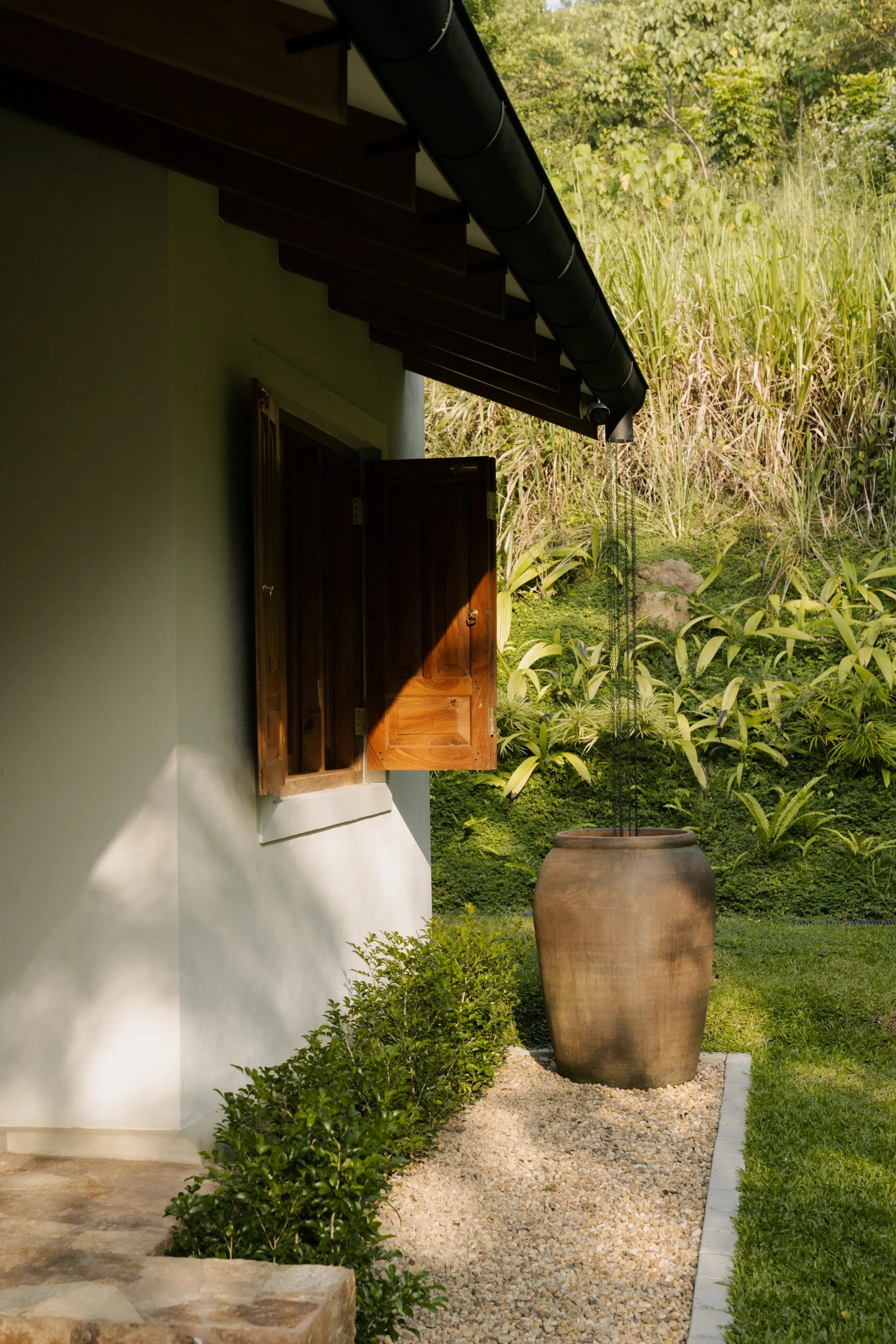
Natural materials do their best work in tropical homes when they are treated as part of the climate strategy, not as decoration. The right surface, in the right place, with air, shade, and time around it, can make a home feel calmer, cooler, and more deeply rooted in its setting.