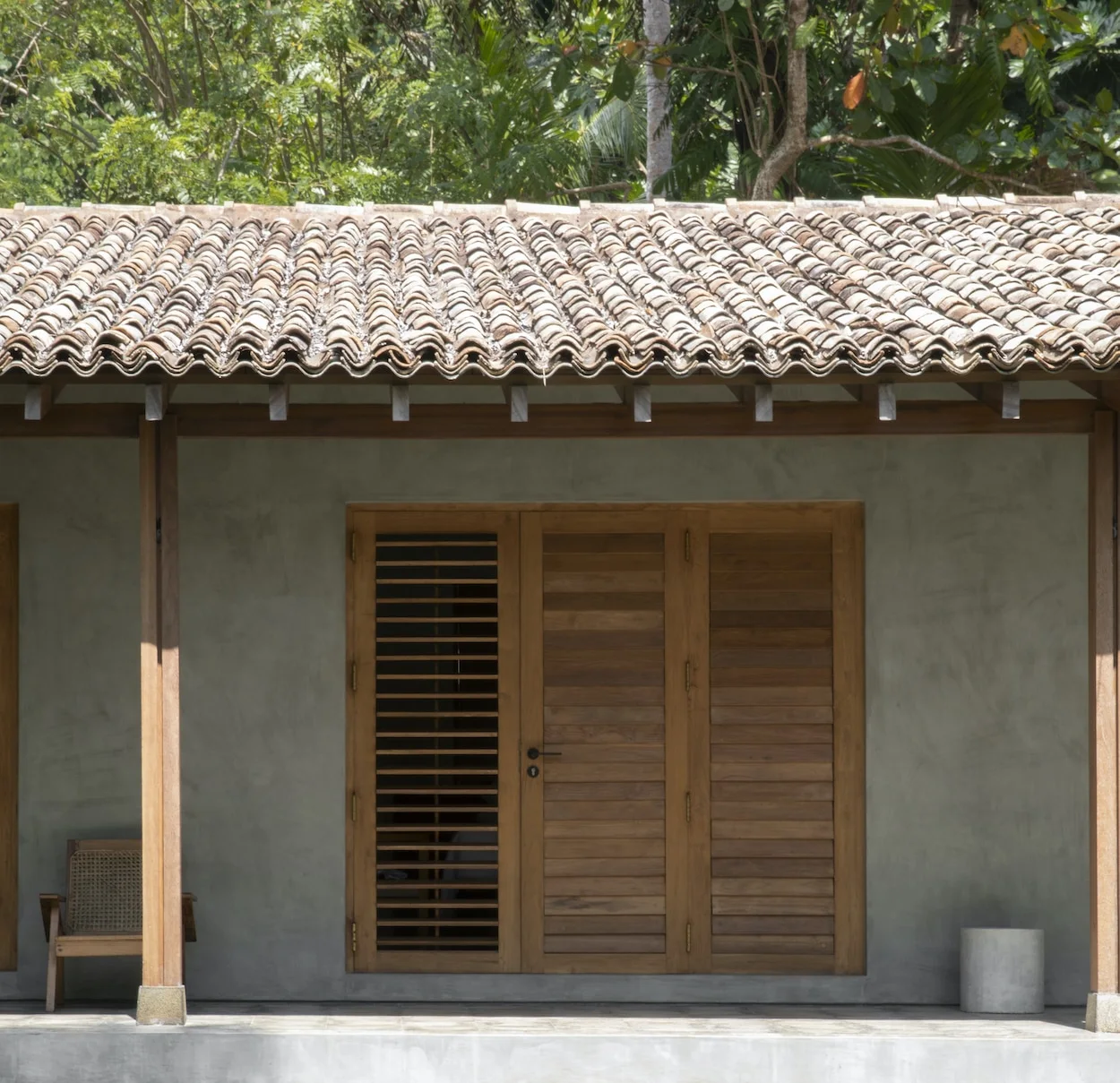
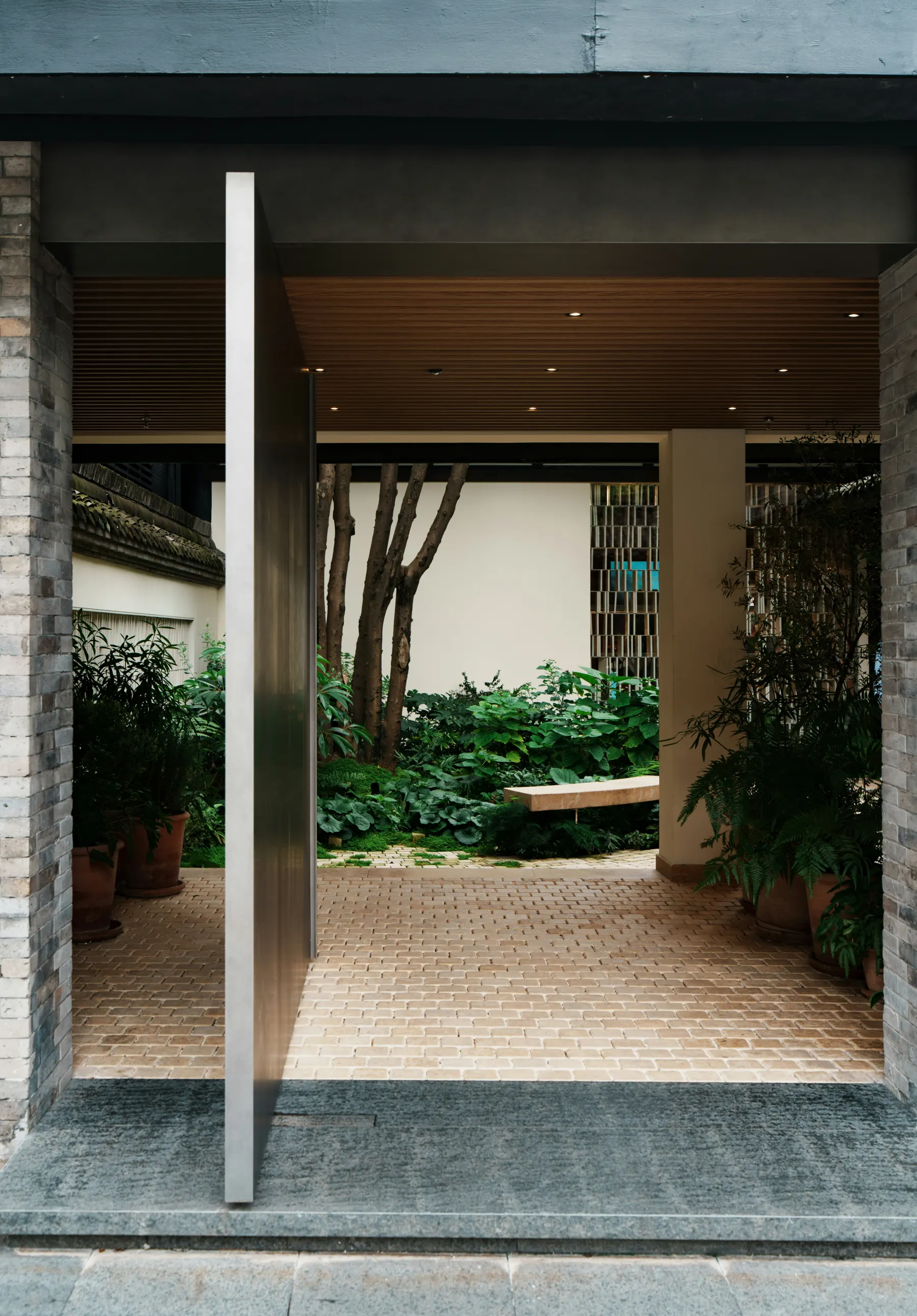
In warm climates, living with less can mean more than owning fewer things. It can mean enclosing less, conditioning less, layering less, and allowing shade, air and landscape to do more of the work.
Minimalism is often discussed in terms of objects.
Fewer possessions. Fewer pieces of furniture. Less visual noise.
But in warm climates, the idea of living with less can extend much further. It can influence how much of a house is enclosed, how rooms connect to the outdoors, which materials feel appropriate and how much we ask mechanical systems to compensate for the climate around us.
A generous home does not necessarily need to be an oversized one.
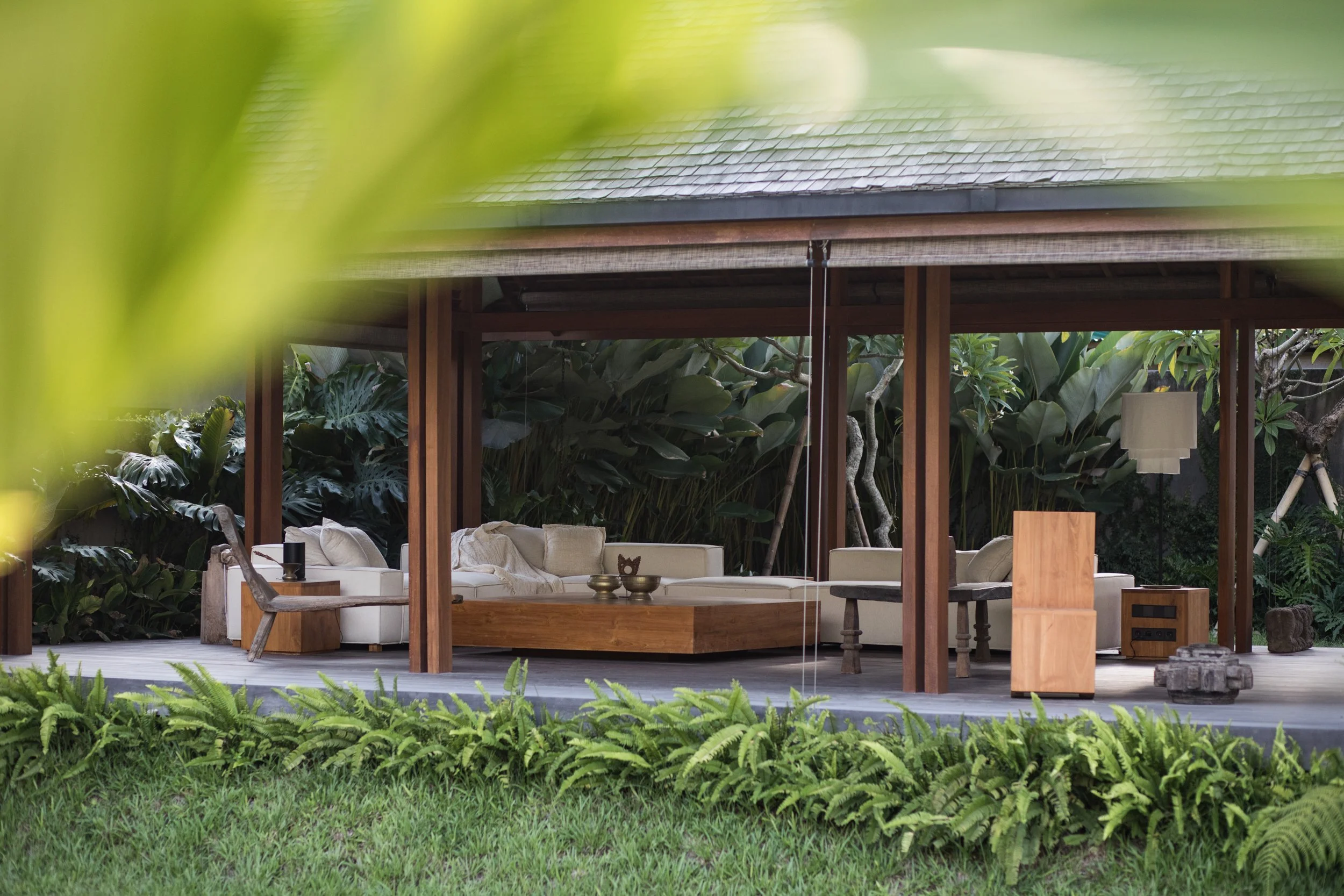
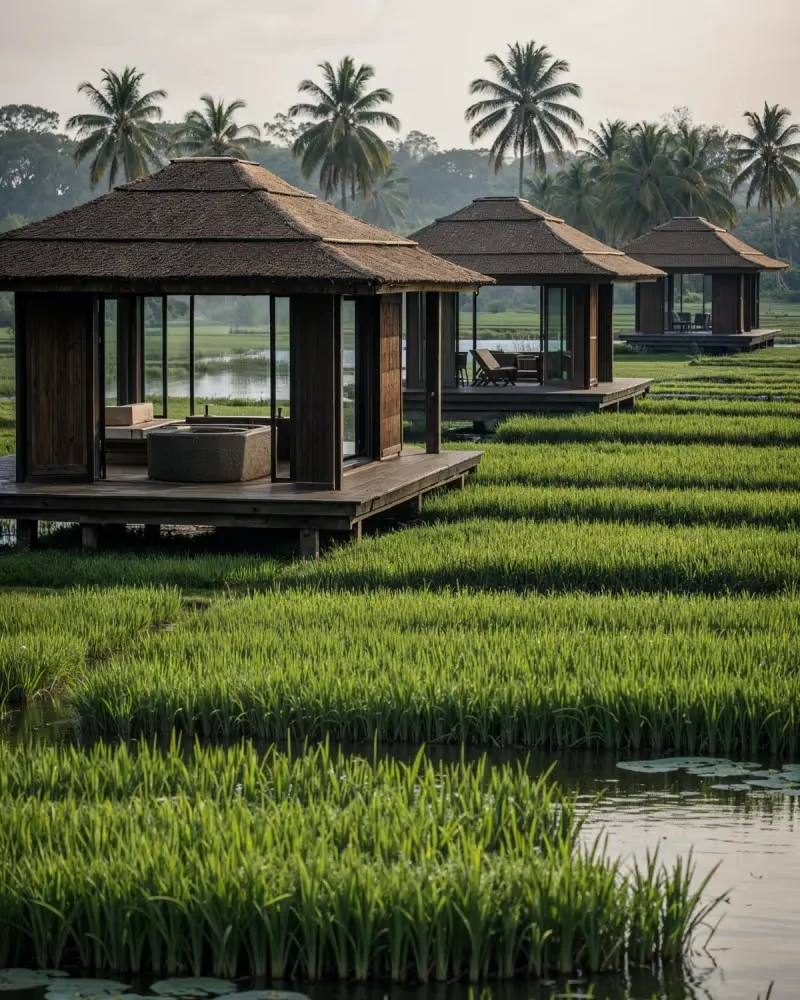
In the tropics, some of that generosity can come from openness instead: a shaded verandah, a courtyard, a garden that extends the view, or a living room that opens fully to the landscape.
These spaces can make a home feel expansive without requiring every square metre to be enclosed, furnished and mechanically cooled.
Less enclosed, more lived
Warm climates allow parts of daily life to move beyond the conventional interior.
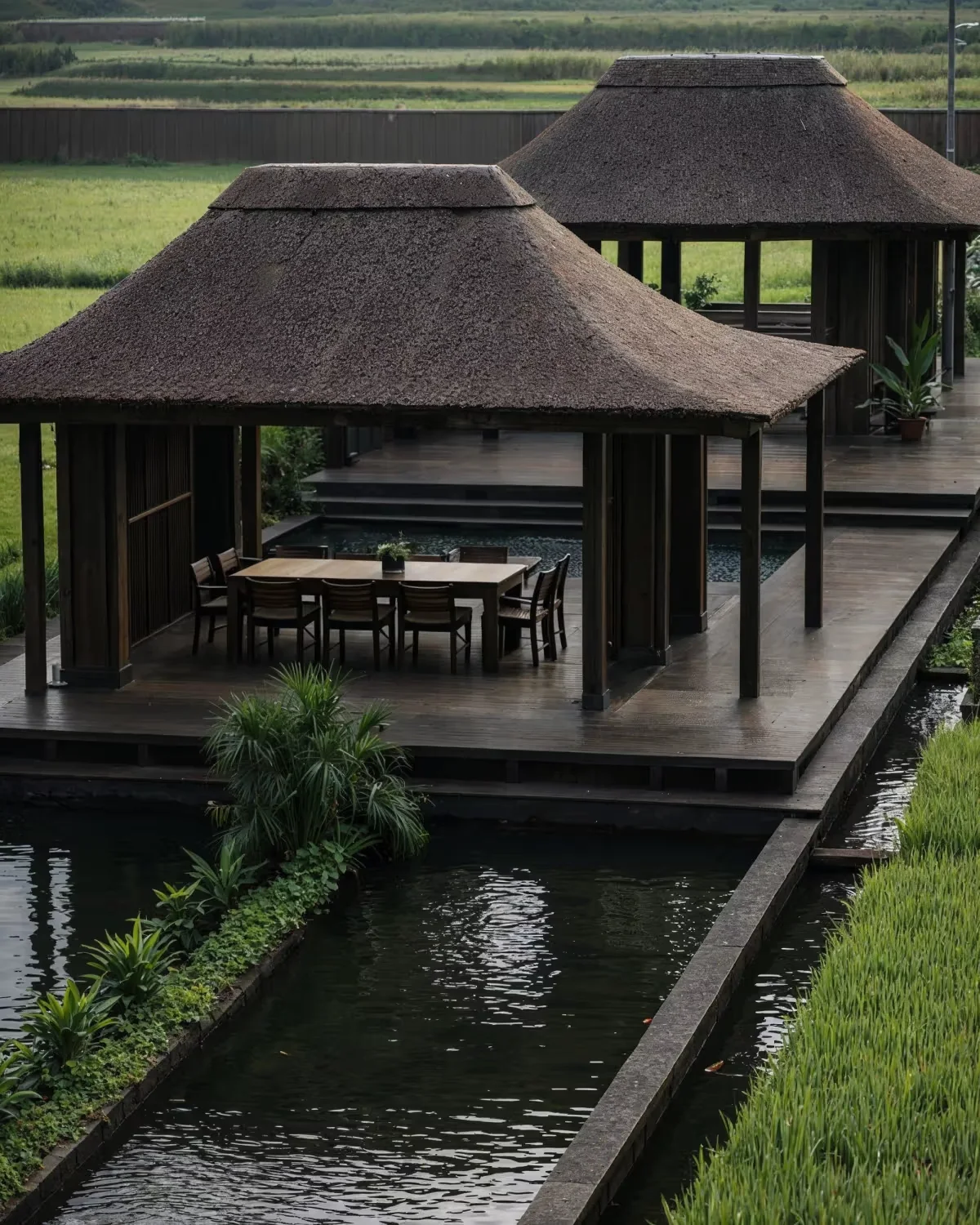
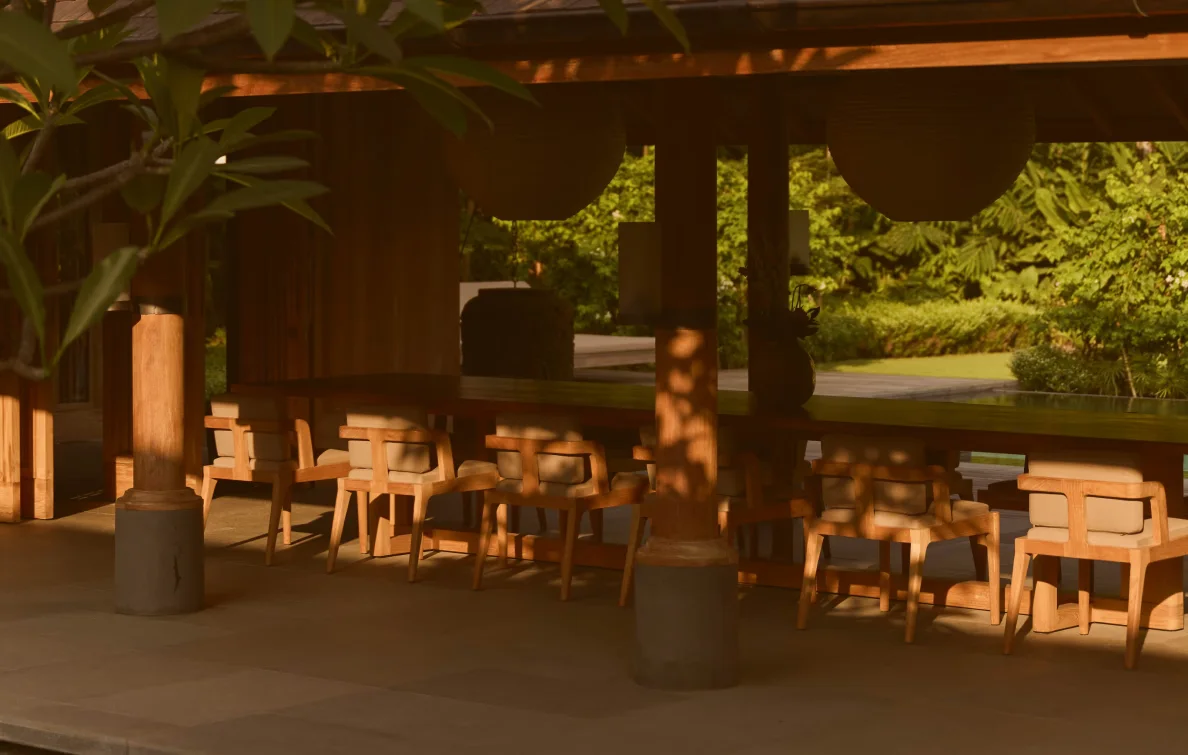
Dining can happen beneath a roof without walls. Reading can move onto a shaded verandah. Circulation can remain open to air. A courtyard can become part of the living space rather than something experienced only through glass.
These are not simply leftover spaces around a house. They can become rooms in their own right, reducing the pressure on the enclosed interior to accommodate every activity.
This changes the way we think about size.
A modest living room can feel considerably larger when it opens onto a covered terrace and garden. Long sightlines, air flow and continuity between inside and out can create a sense of generosity that additional floor area alone does not guarantee.
In the tropics, spaciousness does not always have to come from building more. It can come from opening more.
There is also an environmental argument for questioning unnecessary floor area. Every additional enclosed room requires materials to build, surfaces to maintain and, in many cases, energy to cool.
Living with less can therefore begin with a simple question: how much enclosed space will genuinely be used?
Climate also changes what comfort looks like inside.
In colder regions, interiors often rely on layers: thick rugs, heavy curtains, deep upholstery, throws and other soft furnishings that help create warmth.
In warm and humid climates, comfort can move in another direction.
Stone, terrazzo or terracotta floors can feel appropriate underfoot. Lightweight curtains can filter light without making a room feel closed. Linen, cotton, cane and timber can bring texture and softness without the physical weight of heavily layered interiors.
This does not mean a tropical interior needs to feel bare.
It means a sense of warmth and completeness does not have to come from accumulation.
A room can feel resolved through proportion, material, light, art and a small number of carefully chosen pieces rather than through repeated decorative layers.
Furniture can also be given more space around it. Open-framed chairs, raised legs and visually lighter forms can reduce the sense of density, particularly when the architecture already opens towards a garden or terrace.
The aim is not emptiness. It is to leave enough space for air flow, movement and daily life.
Let architecture and landscape do more
A tropical interior does not exist independently from what surrounds it.
Trees can shade facades and outdoor spaces. Planting can soften hard surfaces and create views from within. Deep roof overhangs can protect openings from sun and rain. Verandahs and courtyards can extend the usable area of a house without enclosing it completely.
When these elements are working well, the interior often needs less from decoration.
A room facing mature planting already receives colour, movement and changing shadow from the landscape beyond. A covered terrace can provide another place to sit, eat or work without becoming another air-conditioned room.
This is one of the more useful lessons of tropical architecture: comfort does not begin at the interior wall.
It begins with the site, the orientation of the building, the shade around it, the floor plan and the transitional spaces between landscape and room.
Living with less in a warm climate should not be interpreted as living without mechanical cooling.
In hot and humid regions, air-conditioning can be necessary and deeply valuable. The more useful question is how much work it is being asked to do.
A house that receives intense direct sun through unprotected glazing will gain more heat. Extensive hard paving can increase temperatures around the building. Rooms without effective cross-ventilation may depend on mechanical cooling even during periods when outdoor conditions could otherwise allow them to remain open.
A more climate-conscious approach begins before the air-conditioner is switched on.
Shade the building. Protect openings from direct sun. Retain mature vegetation where possible. Create opportunities for cross-ventilation. Use ceiling fans. Provide shaded outdoor and semi-outdoor spaces that remain useful through different parts of the day.
Mechanical cooling can then support the architecture rather than compensate for it.
Living with less, in this sense, can also mean asking less of the systems required to keep a home comfortable.
A different definition of enough
There is an important distinction between reduction and deprivation. A house with fewer rooms is not necessarily less generous. An interior with fewer objects does not need to feel unfinished. Nor is a shaded terrace secondary simply because it is not enclosed.
In warm climates, many of the things that give a home its richness are not objects at all. They are the movement of air through a room, the garden beyond an open door, the shifting shadows of trees across a floor, a verandah that remains comfortable when the rain begins, and the sense of space around furniture rather than the accumulation of more of it.
This is where tropical minimalism becomes less about achieving a particular aesthetic and more about understanding what a place genuinely needs.
It can mean less enclosed space where enclosure serves little purpose. Less decoration where material, light and landscape already give a space its character. Less dependence on mechanical cooling when architecture can first provide shade, encourage airflow and reduce heat gain. And fewer objects, chosen carefully enough that each one is given room to matter.
Living with less in a warm climate does not mean accepting less comfort. It means recognising that comfort can come from more than what we build, buy or switch on.