Six artists and studios are working across wood, stone, cane, clay and metal, drawing on South Asia’s material traditions while finding distinctly contemporary forms.
September 11, 2026
Priyanka Narula | The Wicker Story
South Asia holds an extraordinary breadth of material knowledge, from stone carving and terracotta to weaving, woodturning and inlay. What is perhaps more interesting today is not simply the continuation of these practices, but the different directions artists and makers are taking them.
At Homo Faber 2026 in Venice, this could be seen across work from India and Pakistan: familiar materials approached through experimentation, changes in scale, new technologies and highly individual ways of making.
Here, six practices offer distinct perspectives on what contemporary craft from the region can look like.
Shehrbano Salahuddin
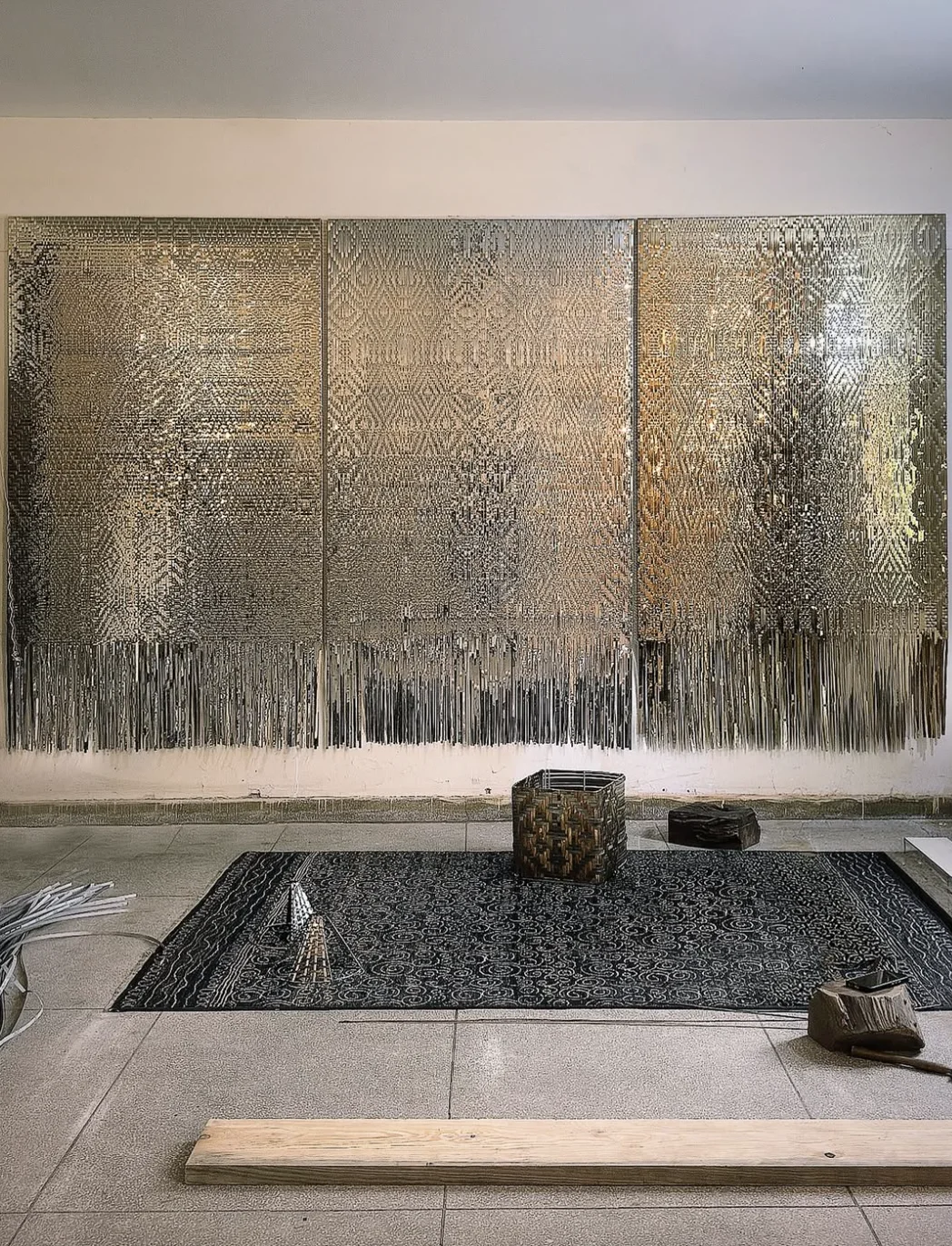
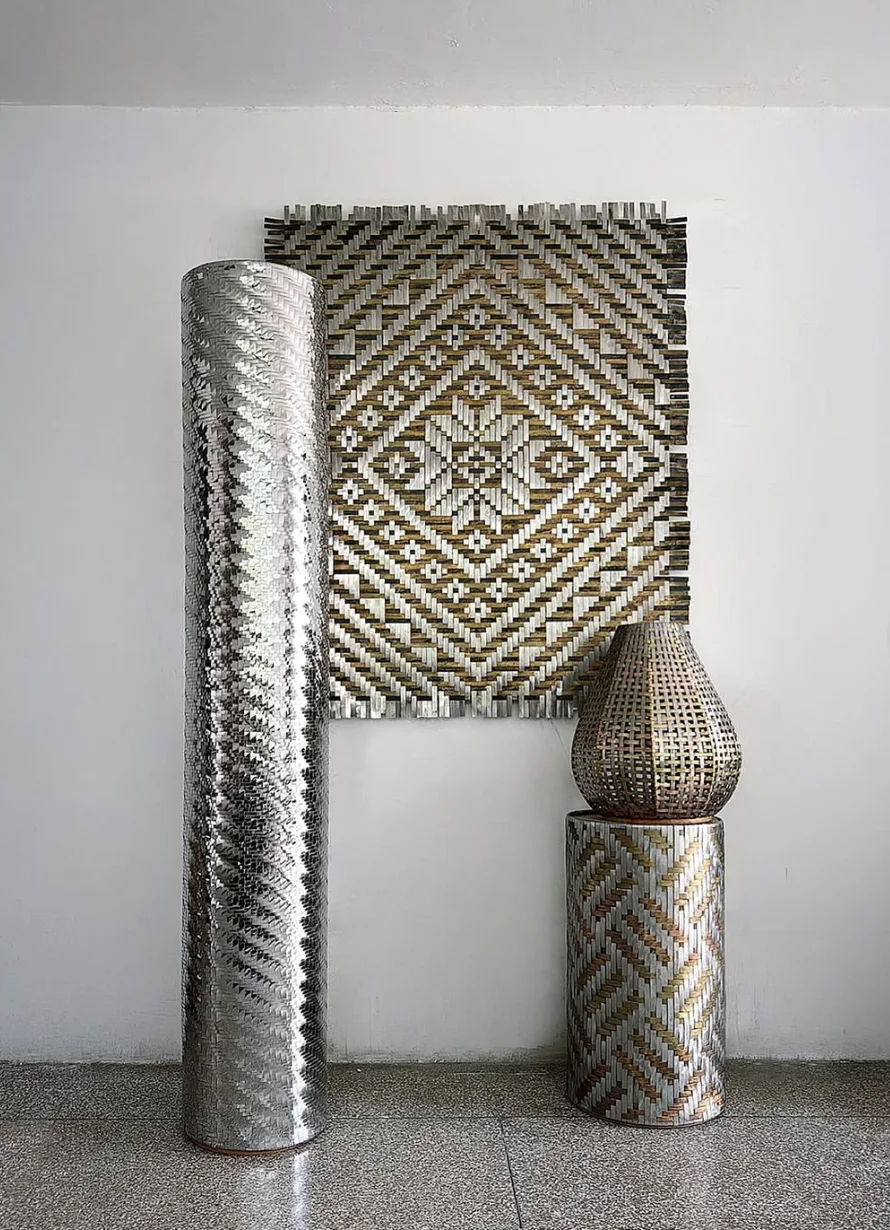
Pakistani artist and maker Shehrbano Salahuddin takes a technique normally associated with pliable fibre and translates it into metal.
Working with brass, copper and stainless steel, she constructs woven surfaces and structures that range from lighting and objects to wall works and sculpture. Her background spans mathematics, fine art and architecture, influences that come together in work built around pattern, repetition and structure.
Rather than reproducing textile forms directly, Salahuddin uses the underlying logic of weaving — the crossing and organisation of individual elements — as a method for working with an industrial material. Islamic geometry and forms observed in nature also inform her approach to pattern and light.
At Homo Faber 2026, Salahuddin is represented by Silent Song 13, placing her metal-weaving practice within a wider exhibition of contemporary making. Architectural Digest Middle East also selected her among its makers to see at this year's edition.
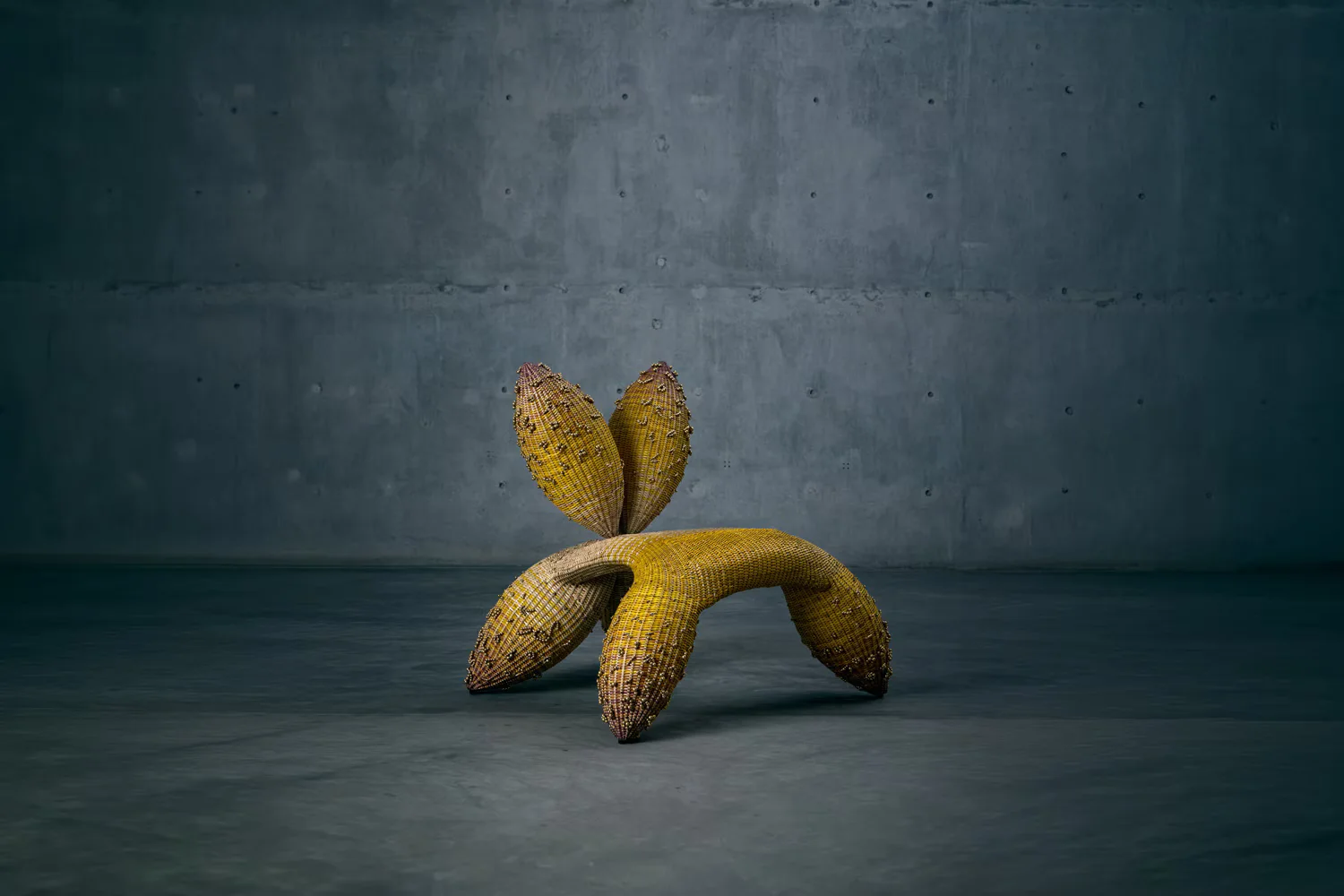
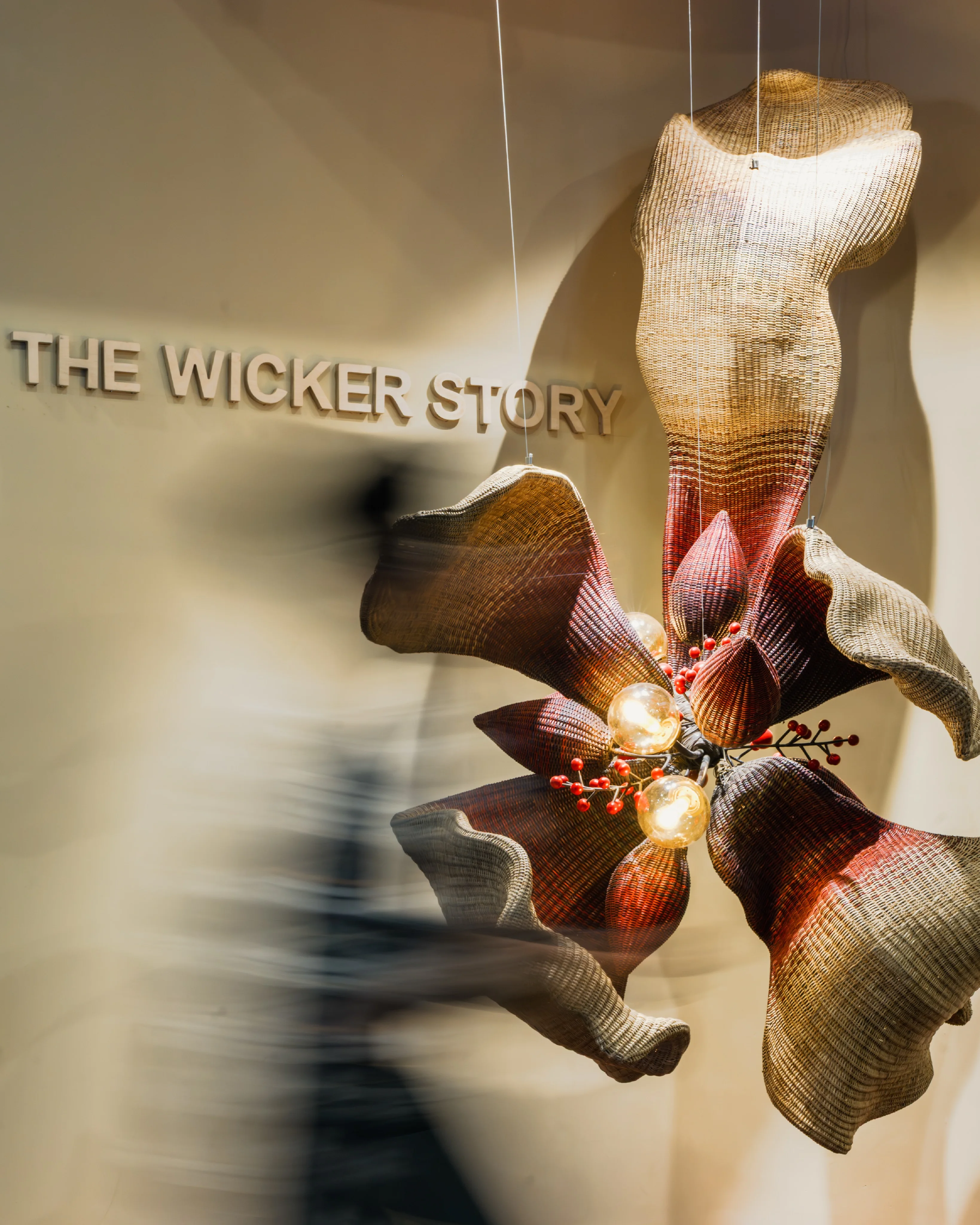
Founded by architect Priyanka Narula, Hyderabad-based The Wicker Story brings together handweaving and computational design.
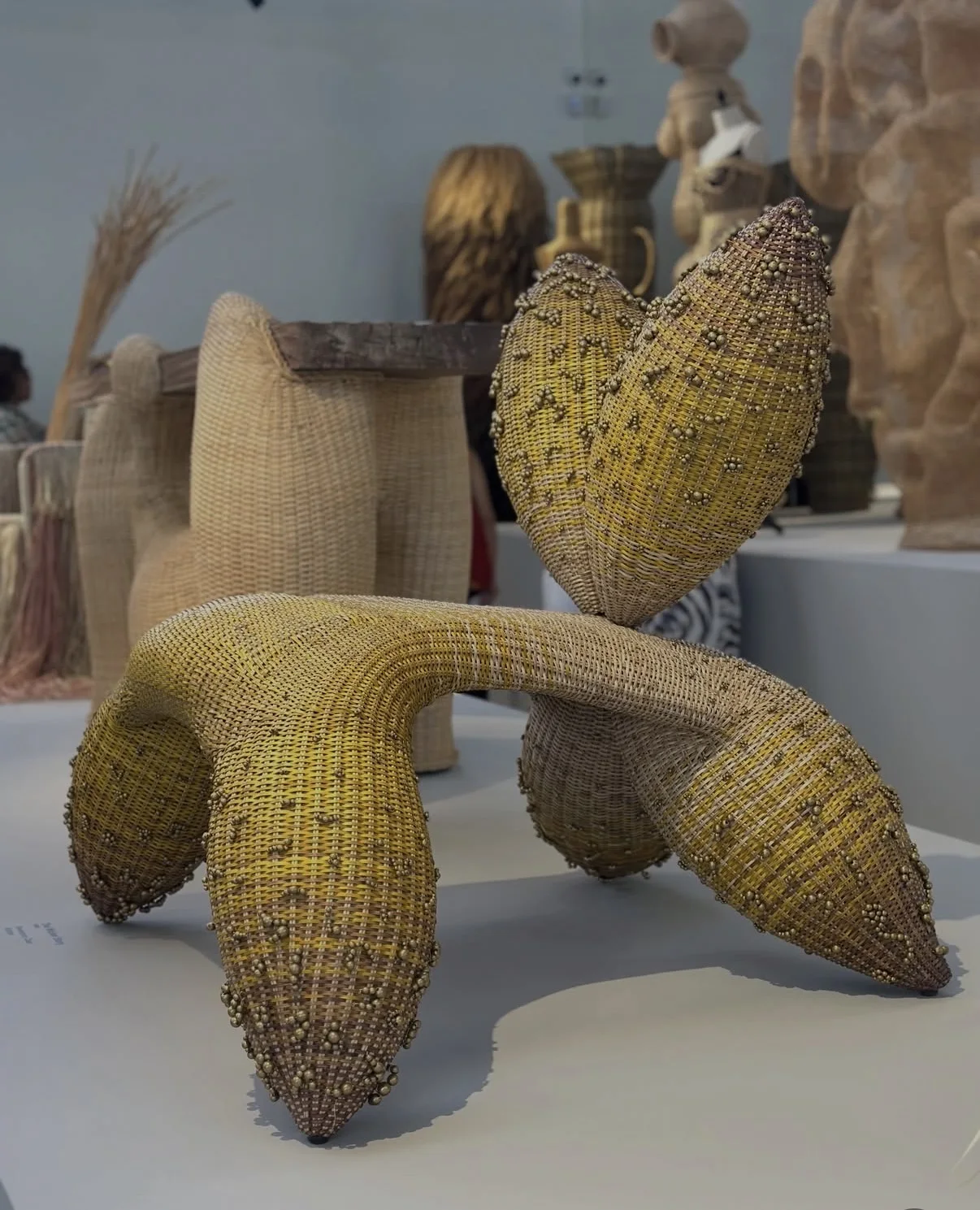
Narula established the studio after studying parametric architecture at IAAC Barcelona. Its approach translates complex digitally developed geometries into forms that can be produced through Indian weaving techniques, particularly using cane and rattan.
The results move across furniture, lighting, sculpture and large-scale installation. Rather than replacing the hand of the maker with digital fabrication, computational design becomes a starting point from which woven structures are developed with artisans.
The studio works with both in-house makers and independent weaving clusters, exploring how basketweaving can operate at new scales and within contemporary furniture and interiors.
At Homo Faber 2026, The Wicker Story presents the Reverance Chair, continuing this conversation between precise geometry and handwoven construction.
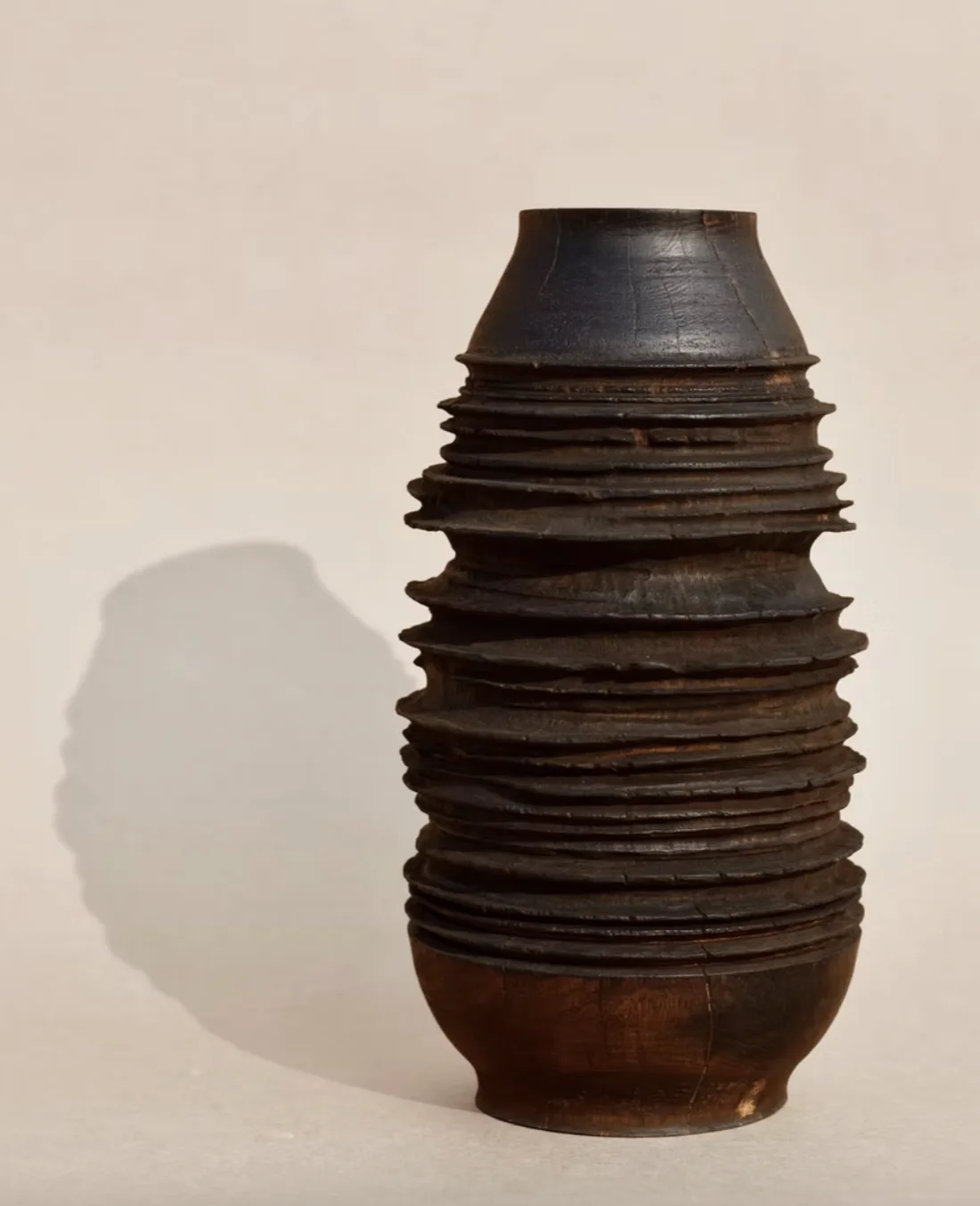
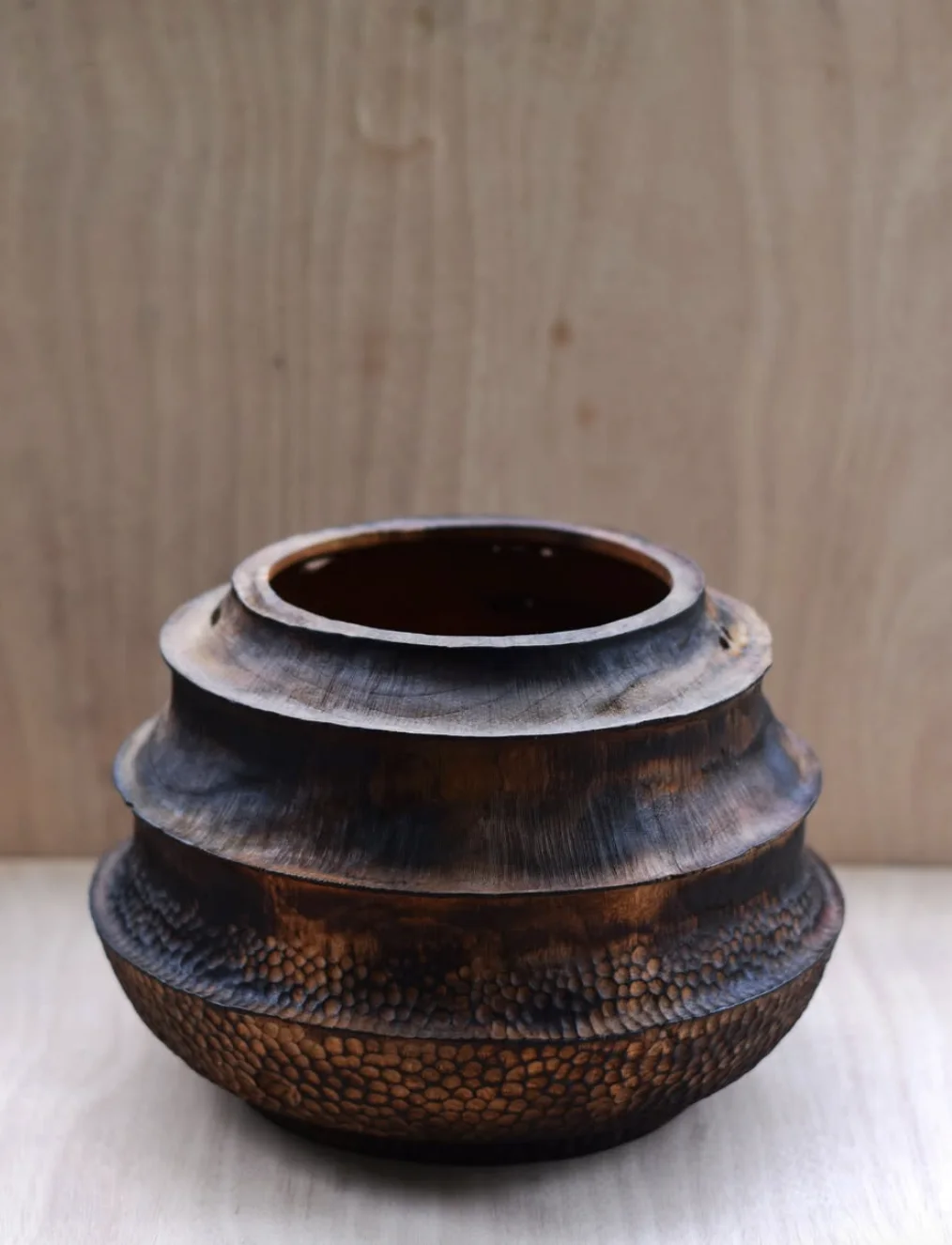
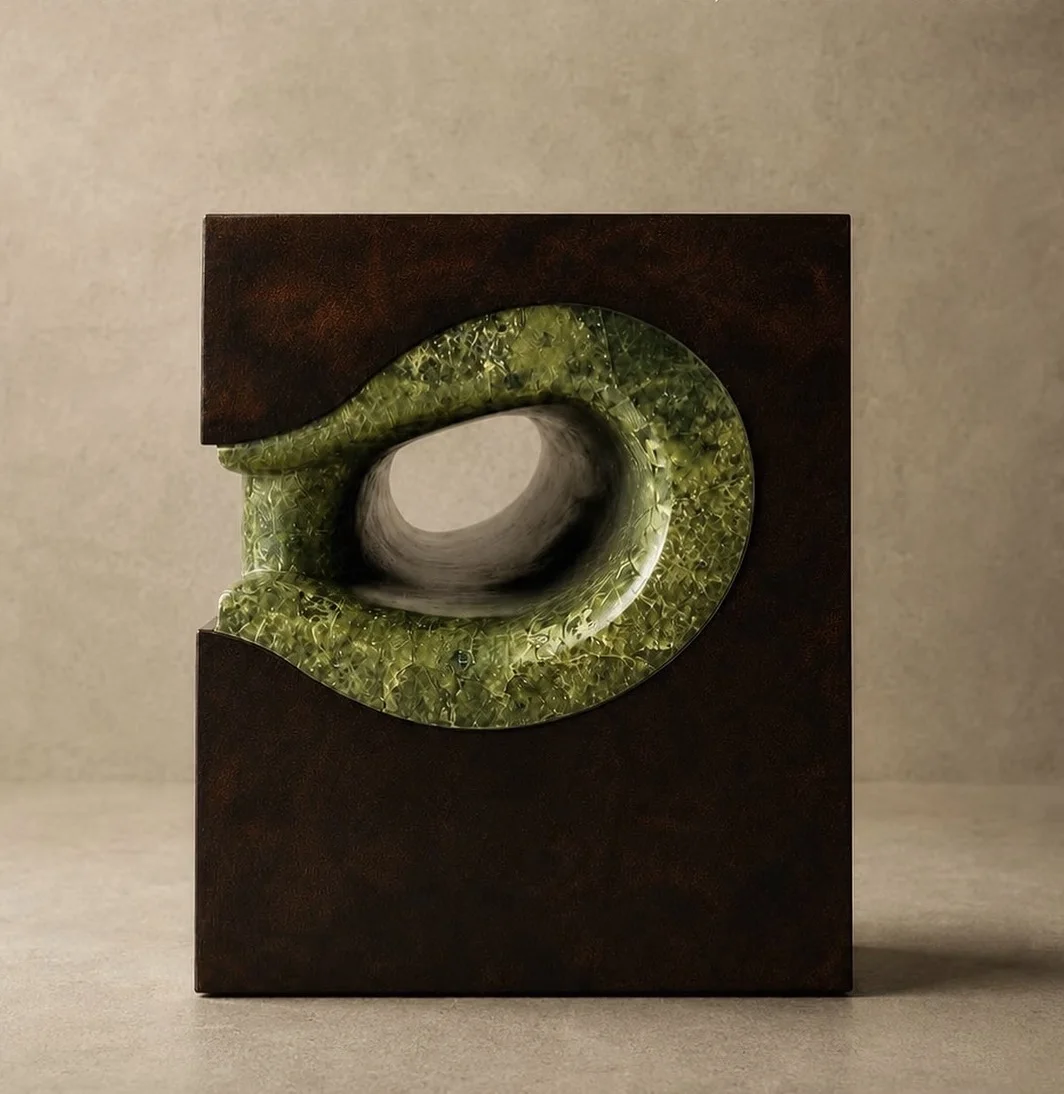
Chennai-based Reha Salvi came to woodturning after working for a decade in architecture and interior design. She is self-taught, developing her practice through experimentation rather than through an established craft lineage.
Working from her studio, Lakkadghoom, Salvi turns, carves and chars Indian neem and teak into hollow sculptural forms. Rather than working with standardised timber boards, she often uses branches and logs, retaining the continuity and irregularities of the grain. Cracks, spalting and changes in colour are allowed to remain visible within the finished object.
Her surroundings also enter the work. Living near the Chennai coast, Salvi collects and photographs shells, fossils and seed pods found along the shore, translating aspects of their forms into wood.
At Homo Faber 2026, her works Beej and From The Shore appear in A Rooted Ascent, an exhibition centred on wood and woven natural materials.
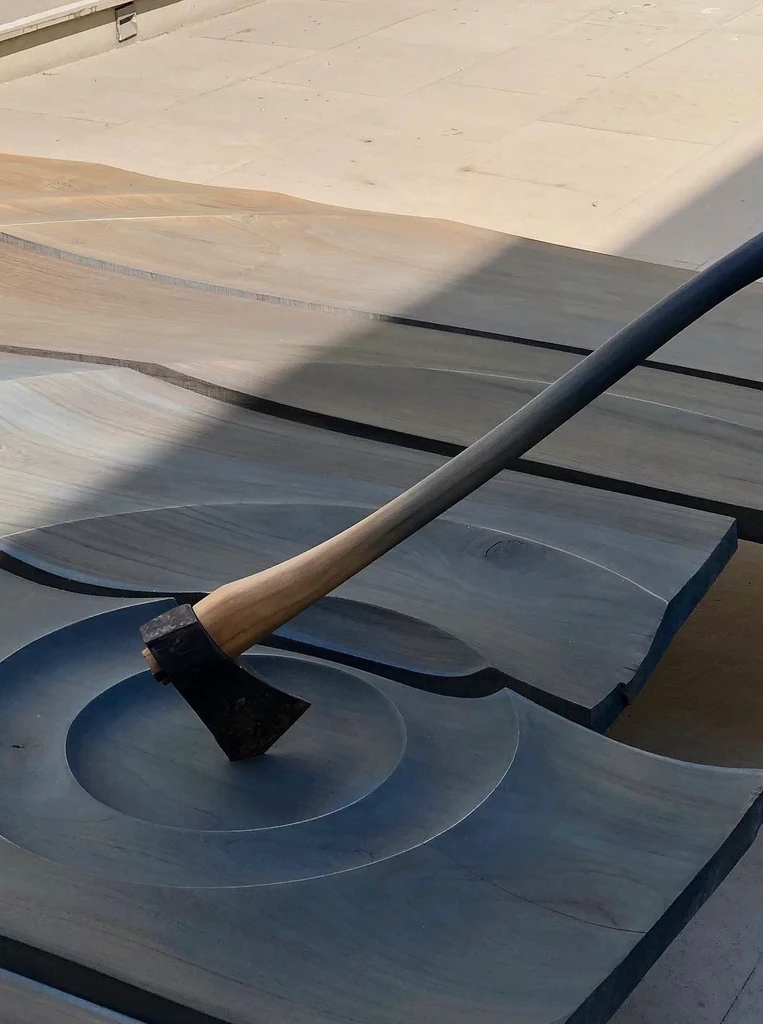
For Ahmedabad-based artist and industrial designer Kavin Mehta, natural indigo is not limited to textile.
Mehta first encountered the dye while researching materials as an industrial design student. After establishing his studio near Ahmedabad in 2015, he began experimenting with discarded stone from the surrounding area and taught himself to carve.
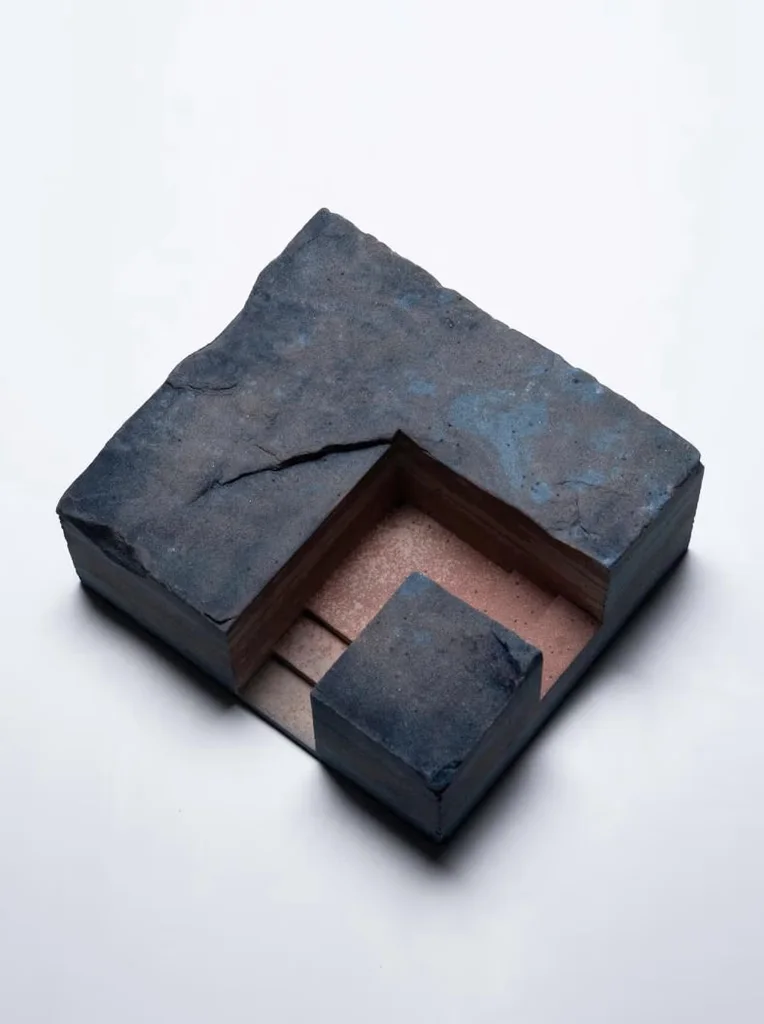
Today he works primarily with limestone and calcium-rich marble. The stone is shaped by hand before being repeatedly immersed in natural indigo vats, a process that can take between 10 and 15 days for the colour to fully develop. Differences within the stone itself influence the resulting blue.
Architecture remains present in his forms. Staircases recur throughout his sculpture, reduced from architectural elements into compact geometric objects. Alongside his own practice, Mehta is involved with Ahmedabad's Indigo Art Museum, where research explores the use of indigo across materials extending beyond cloth.
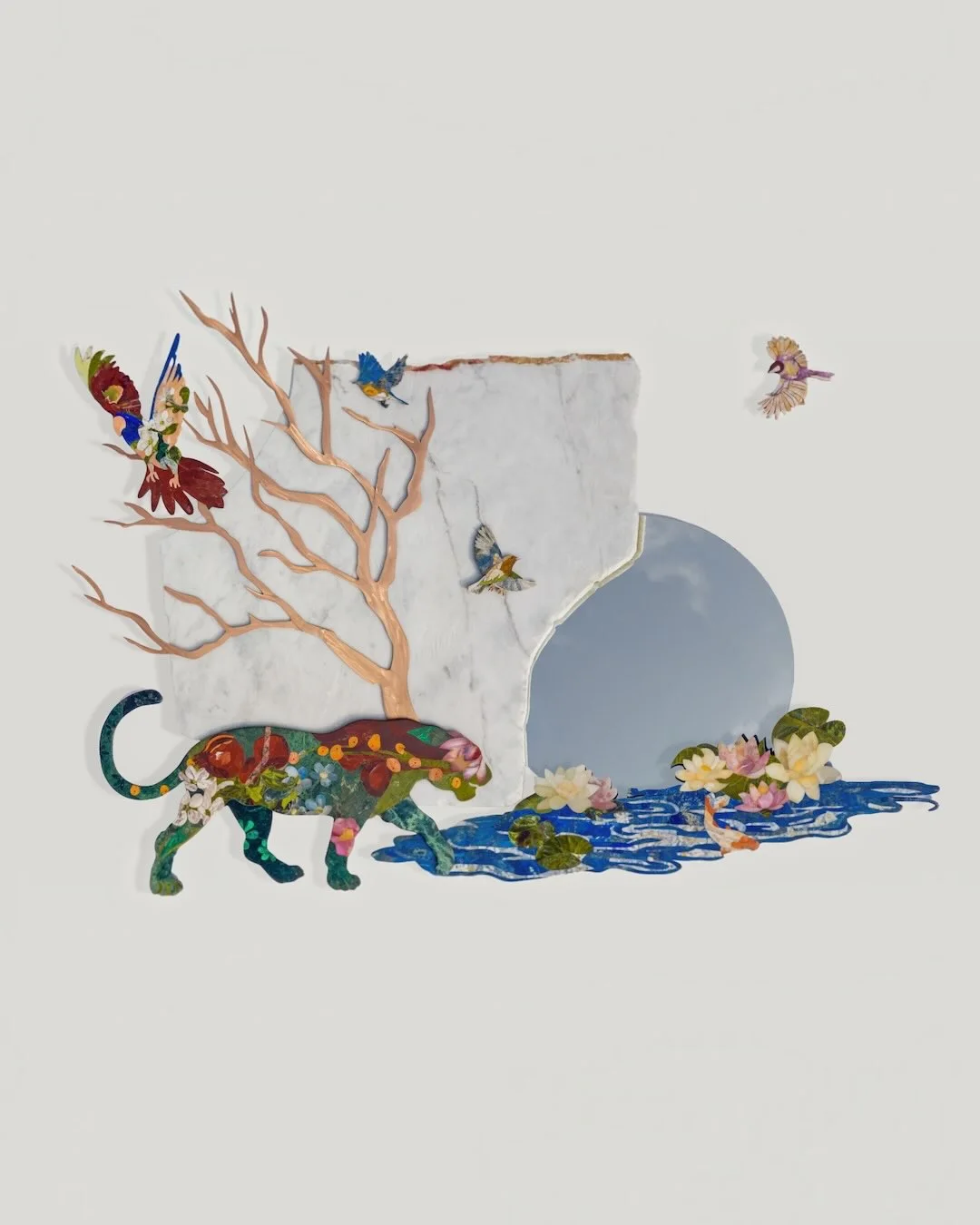
In Peshawar, Studio Lél has worked with stone marquetry for more than three decades.
The atelier was founded in the early 1990s by artist Farhana Asad, following an encounter with a stone-inlaid box made by a displaced Afghan artisan. From that collaboration developed a practice centred on pietra dura — locally known as parchin kari — in which precisely cut pieces of coloured stone are assembled into an inlaid surface.
Today, Studio Lél works under the artistic direction of multidisciplinary artist Meherunnisa Asad. Its material vocabulary extends beyond pietra dura into lapidary work, metalwork, scagliola, cloisonné and verre églomisé, using stones including serpentine from the Hindu Kush, onyx from Balochistan and lapis lazuli from Badakhshan.
The studio's model is also collaborative. Pakistani and displaced Afghan artisans work within the atelier, with shared authorship forming an important part of its approach.
For Homo Faber 2026, Studio Lél presents Threshold Study I and demonstrates the process of stone marquetry as part of An Atelier Alive.
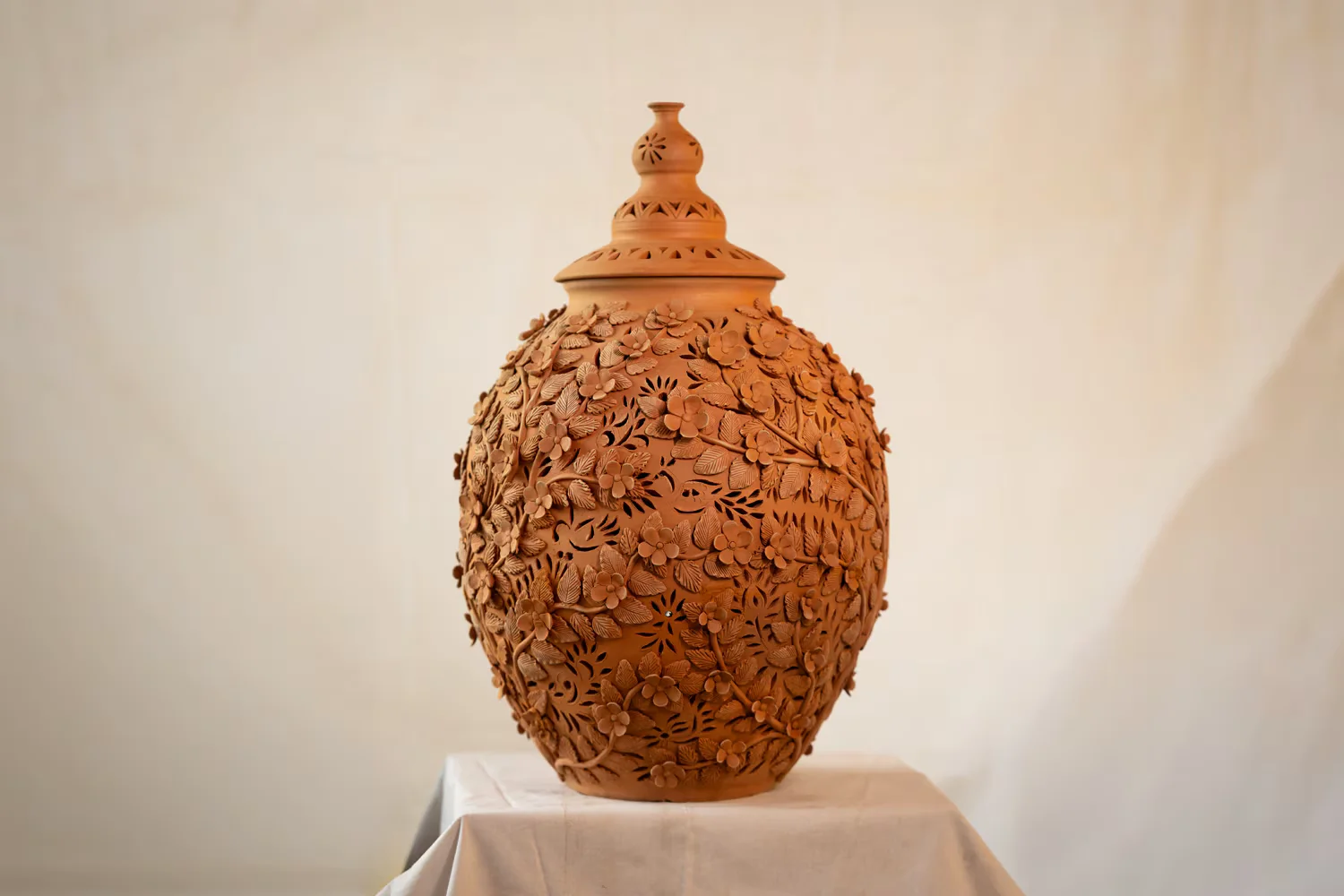
For West Bengal artist Dolon Kundu, clay has been a material of making since childhood.
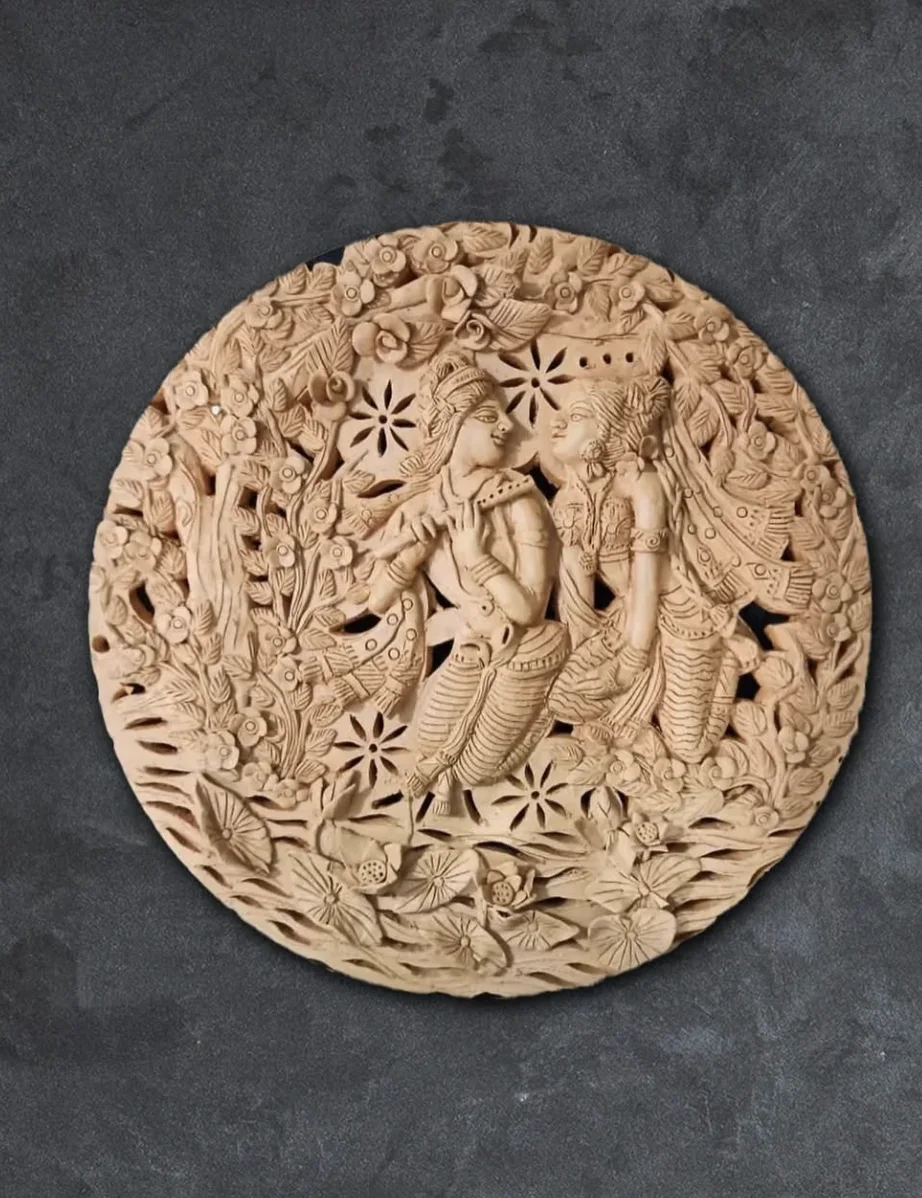
Now based in Kolkata and working through Maarttikee, Kundu specialises in pinch pottery — building clay directly by hand rather than throwing it on a wheel. Her practice encompasses sculptural panels, vessels and figurative works, frequently drawing on plants, mythology and faith.
Her Homo Faber 2026 work Mati'r Bon consists of large terracotta vessels created using this hand-building technique. Each flower is individually formed and pressed into the surface. Among the botanical motifs is night-flowering jasmine, associated with the arrival of Durga Puja in Bengal, alongside chrysanthemums that recur elsewhere in Kundu's work.
Kundu also teaches the technique and leads a rural women's craft cluster, training makers in the production and development of terracotta objects. In 2024, she received India's Shilp Guru National Award.
What makes these six practices compelling is not only the refinement of the finished work, but the depth of material knowledge behind it.
Across South Asia, woodturning, terracotta, cane weaving, stone carving, inlay and metalwork are not simply decorative traditions. They are part of long, highly developed cultures of making, shaped by local materials, regional techniques and generations of specialised skill.
These artists and studios take that inheritance somewhere new. Reha Salvi turns Indian wood into forms that feel almost geological. Kavin Mehta brings natural indigo into carved stone. The Wicker Story pushes cane weaving through computational geometry. Dolon Kundu builds terracotta entirely by hand. Studio Lél transforms stone marquetry into richly layered contemporary work, while Shehrbano Salahuddin reconstructs the logic of weaving in metal.
The results are remarkably individual, yet they share a confidence in material that is difficult to imitate. These are not crafts made contemporary by stripping away their history. Their strength comes from knowing that history well enough to move beyond it.
At Homo Faber 2026, that makes South Asia’s contribution especially exciting: shaped by heritage, technically ambitious and entirely of the present.