Hosting is often approached as an exercise in decoration. We choose the tableware, arrange the flowers, plan the menu and think about how everything will look when the guests arrive.
A tropical minimalist approach begins somewhere else.
It begins with the place.
The timing, the garden, the weather, the architecture and the food all have a role to play. Rather than creating an atmosphere from scratch, the aim is to notice what is already there and allow it to shape the experience.
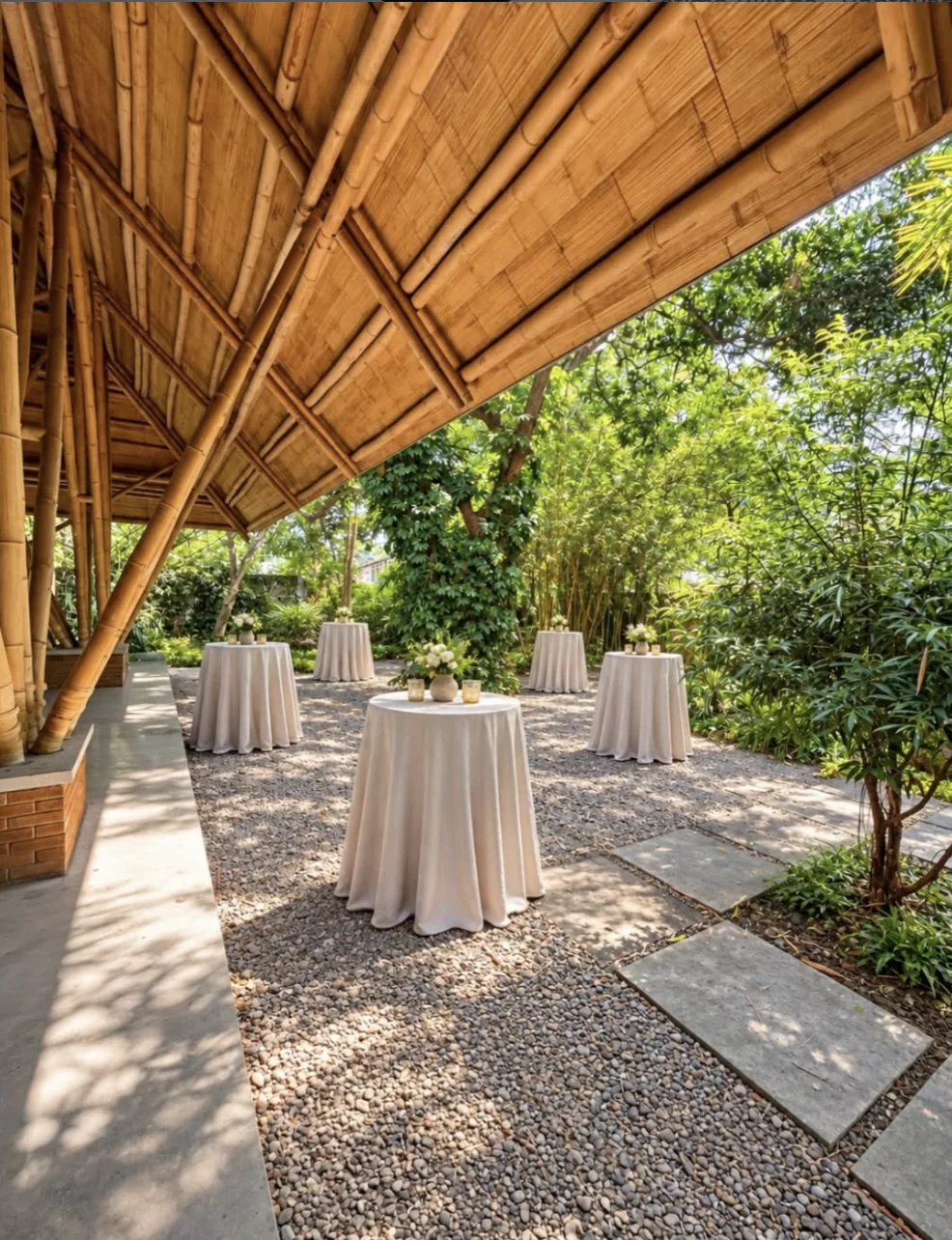
The tropics are blessed with a climate that lends itself naturally to outdoor living. With warm temperatures and the opportunity to spend much of the year outside, hosting can feel effortless, whether in a garden, on a verandah or in a space that opens seamlessly to the outdoors. One of the greatest luxuries of tropical living is the ability to make the most of the weather, and hosting is an opportunity to do just that. These principles can, of course, be adapted to other climates, working with the seasons and surroundings wherever you are.
Let the Landscape Do the Decorating
The easiest way to overdecorate a gathering is to start decorating before looking at the surroundings.
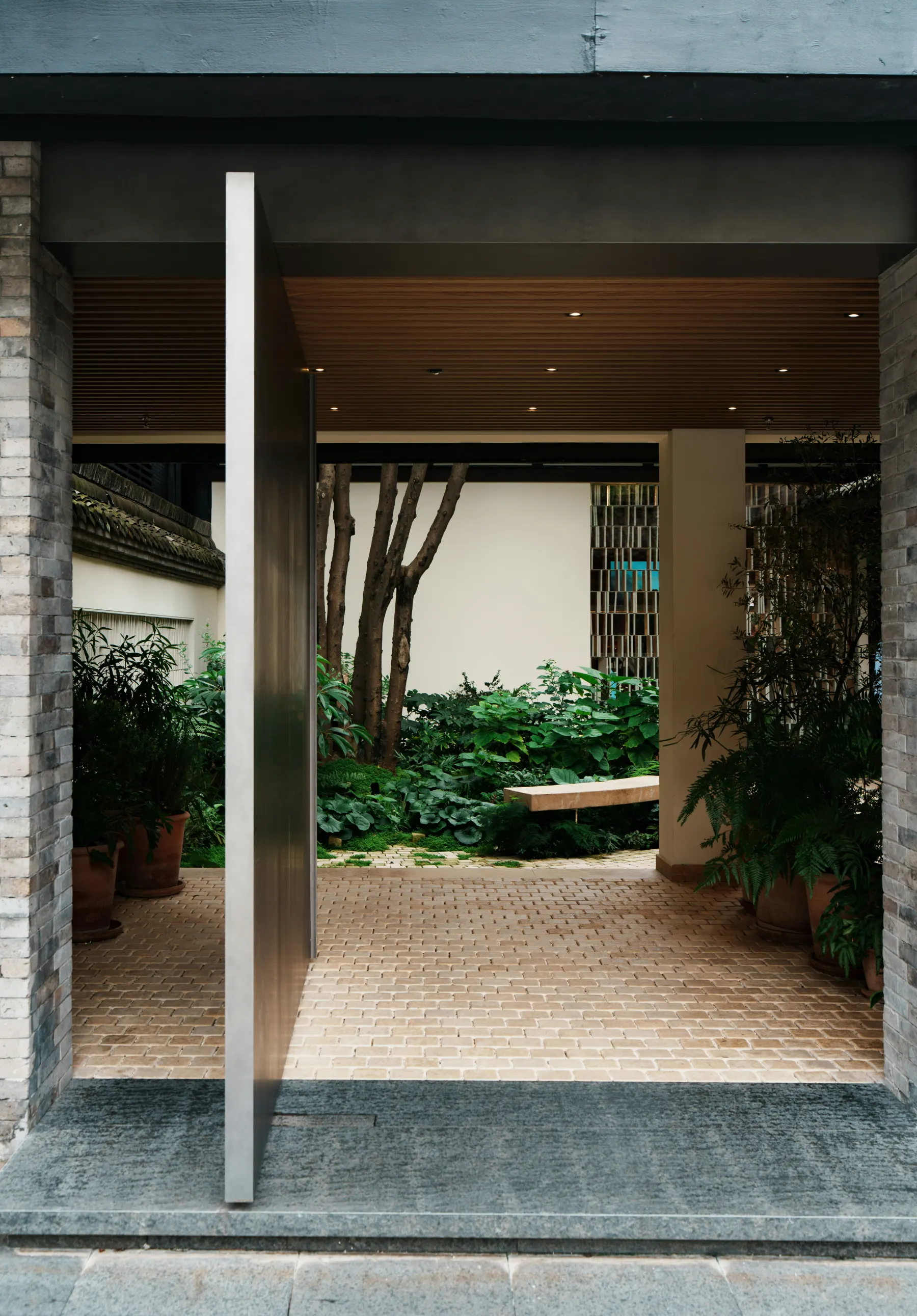
A mature tree, a view across a garden, a pool or even the changing light outside a window can provide more atmosphere than a collection of decorative objects ever could.
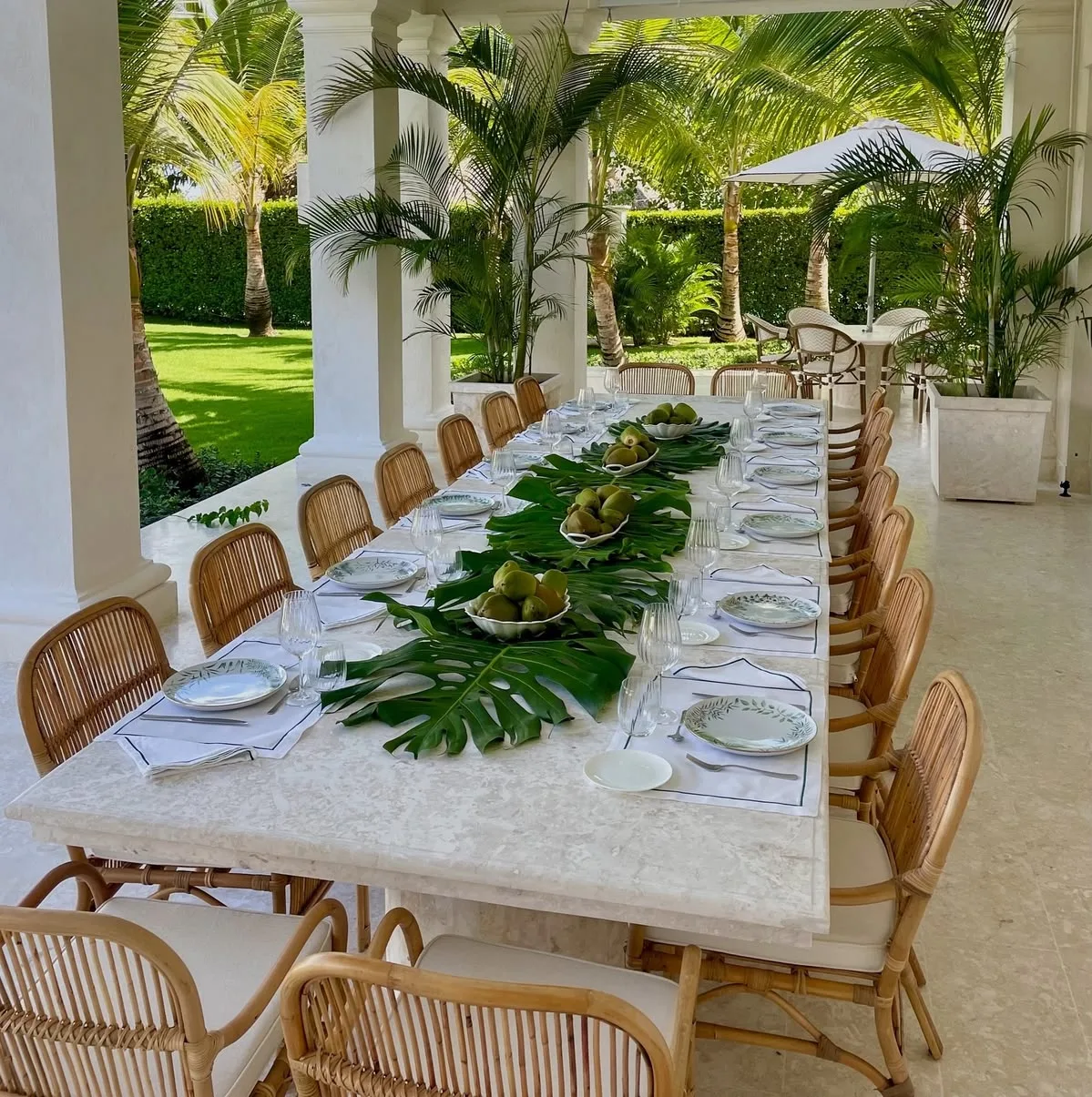
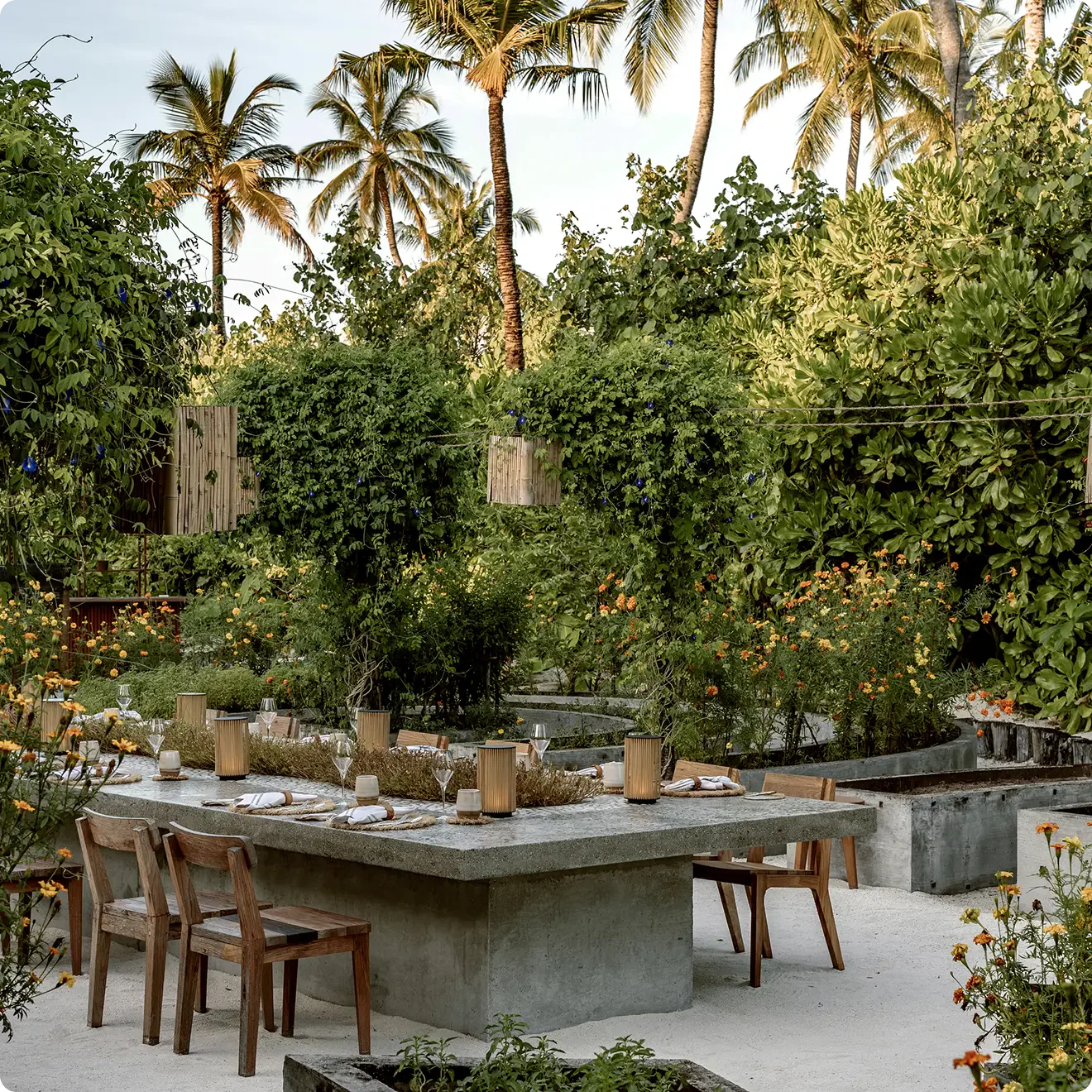
Where possible, position the gathering so that the landscape becomes part of the setting. A table beneath a tree may need little more than linen and a few pieces of tableware. A dinner beside a garden may already have its own colour and texture. Even a small terrace can become more atmospheric when the view beyond it is allowed to remain visible.
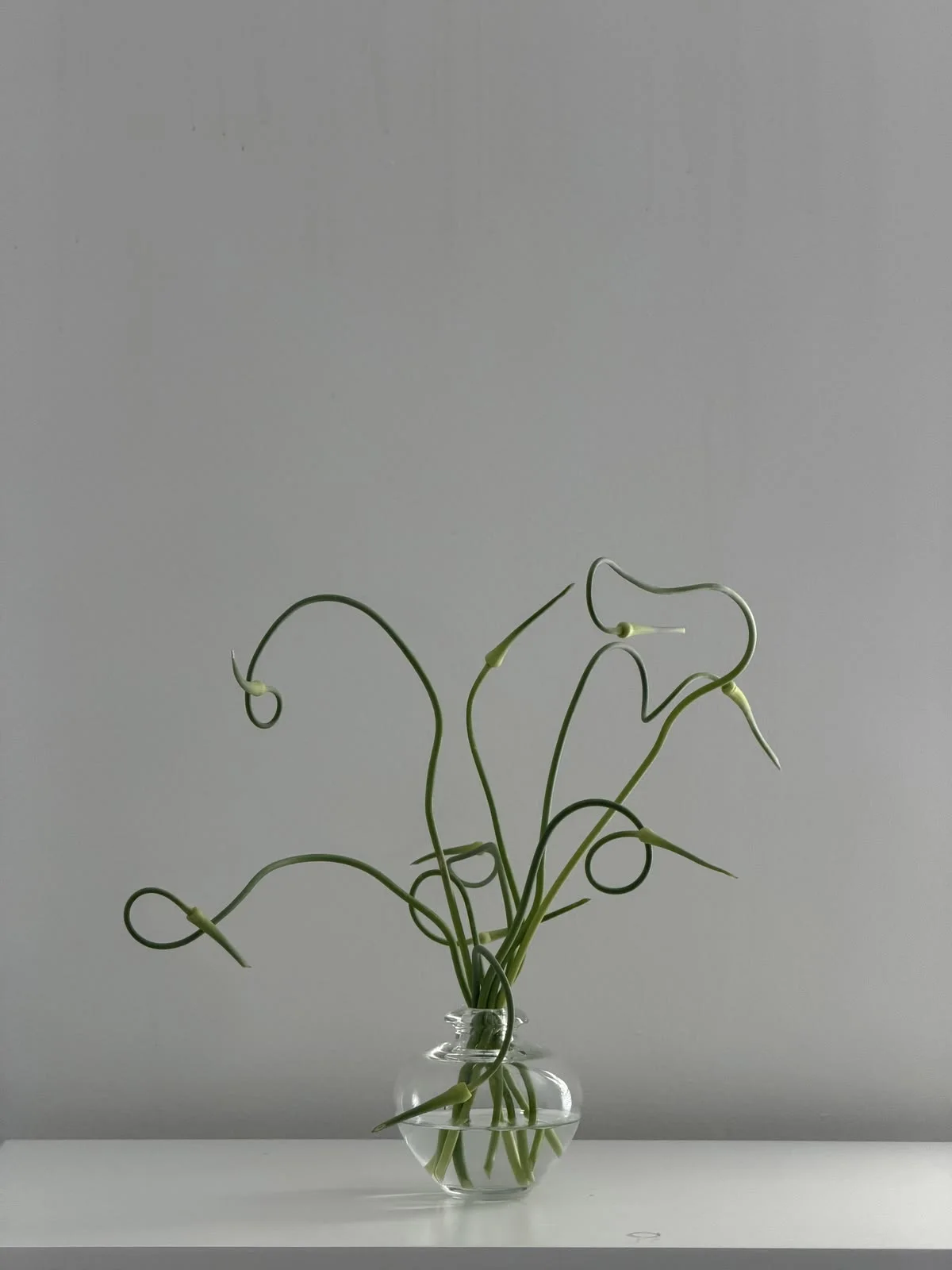
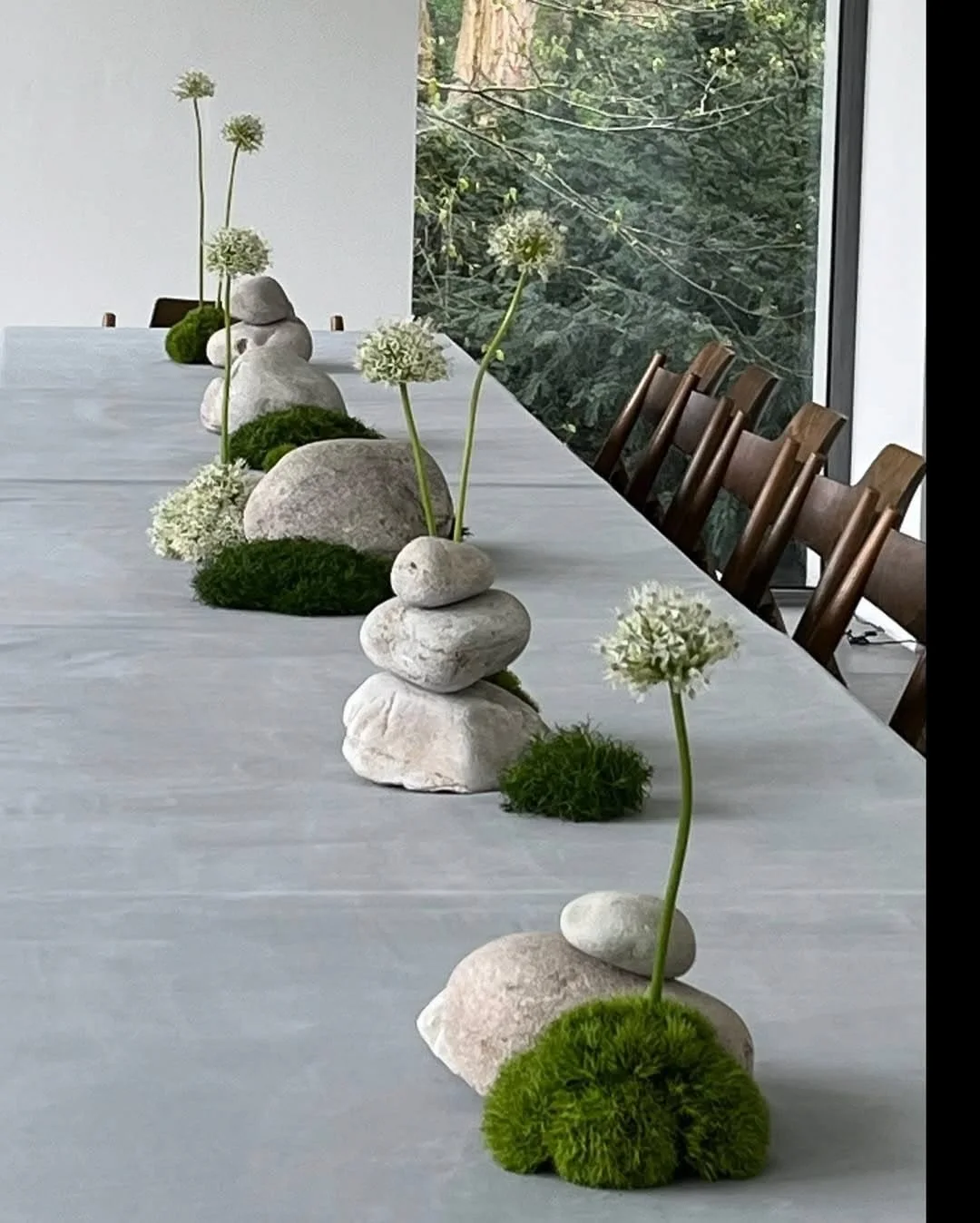
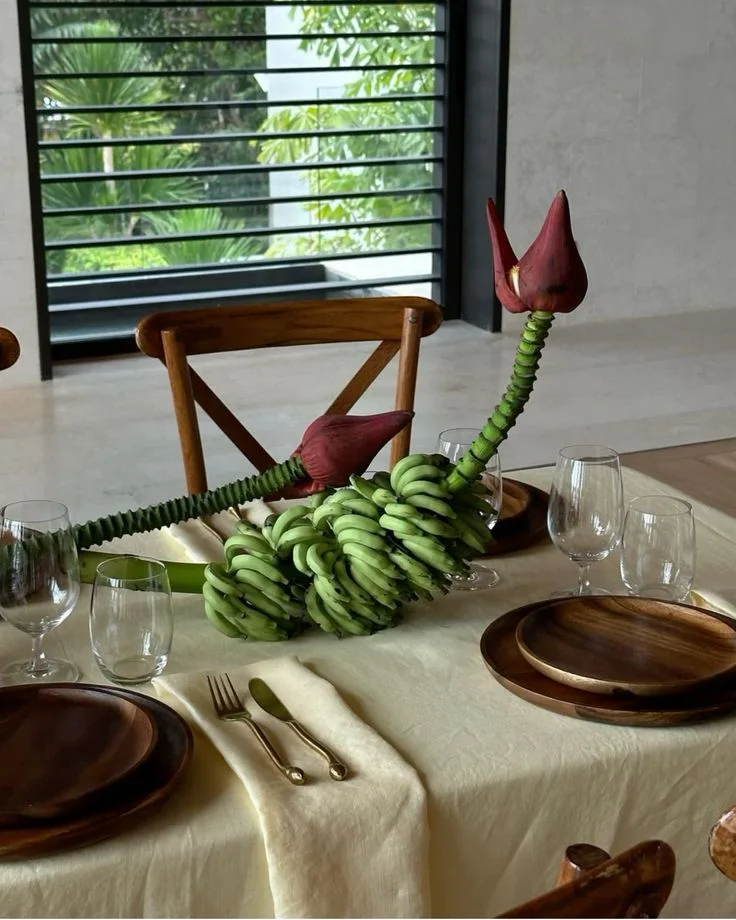
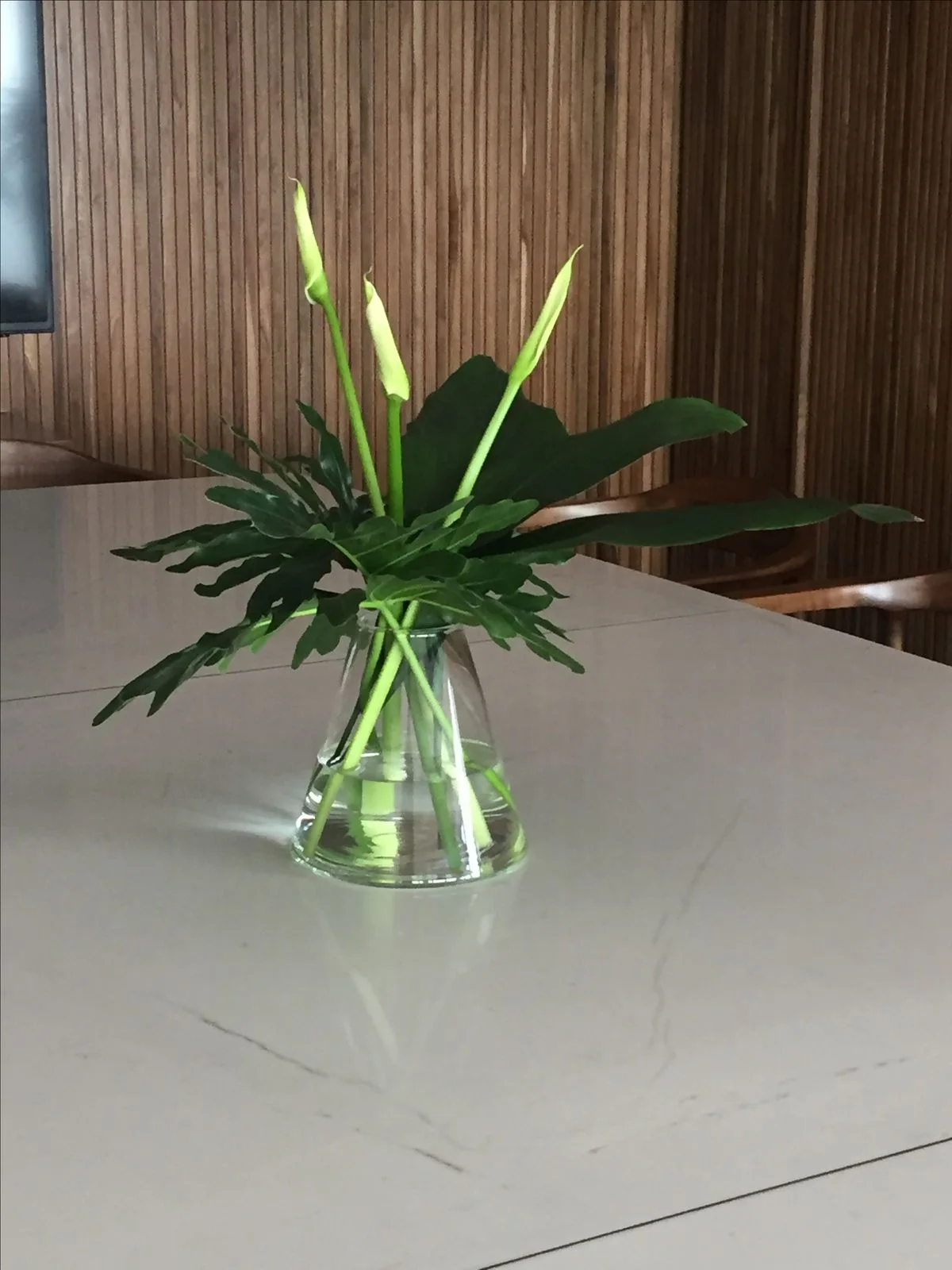
Flowers and foliage can still have a place, but they don't need to arrive as elaborate arrangements. A few branches, herbs, seasonal flowers or fruit can be enough.
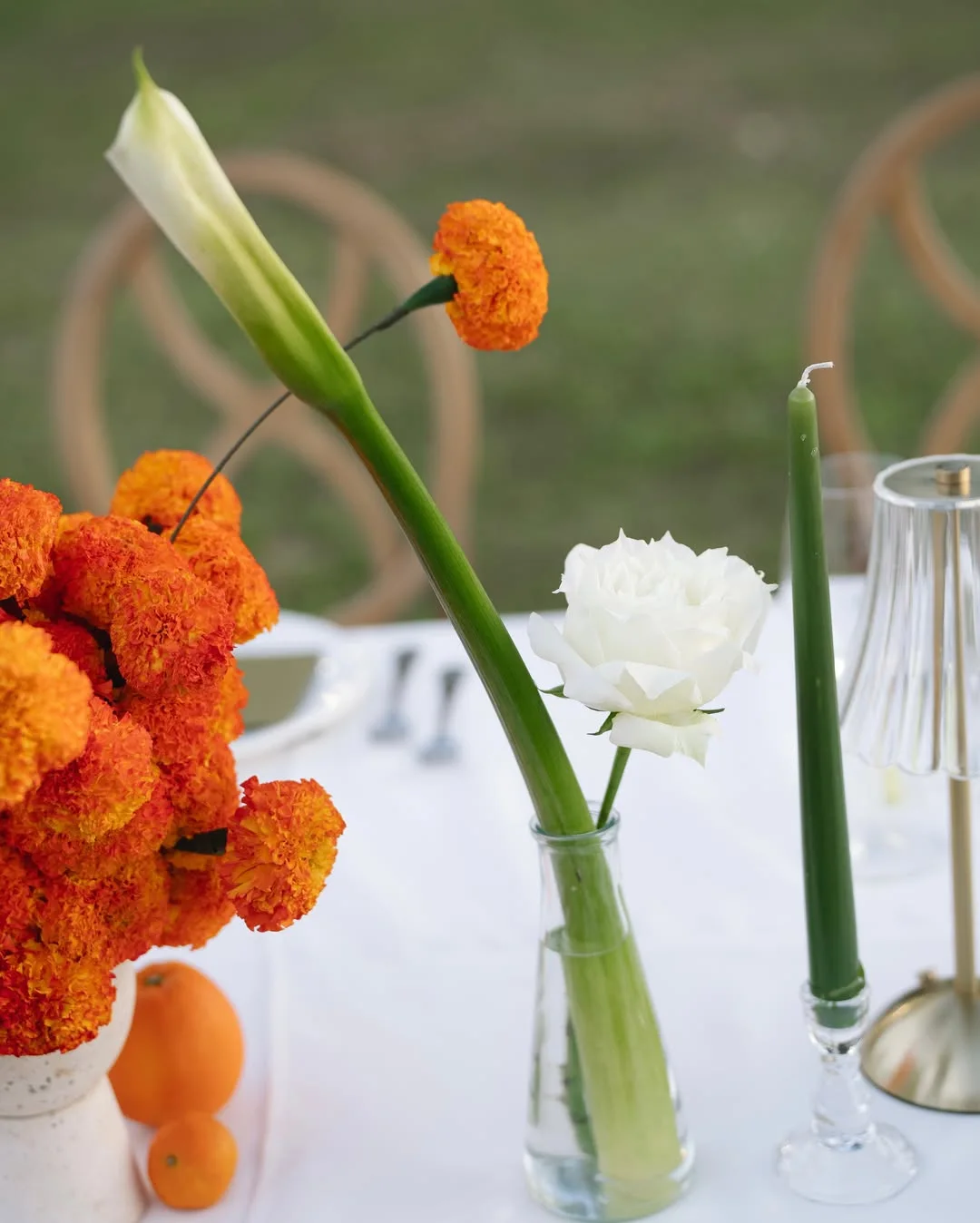
One of the simplest ways to embrace tropical minimalism is to shop your own garden. The tropics offer an abundance of foliage, from delicate leaves and interesting branches to larger, sculptural greenery that can bring the table to life. If you're unsure where to begin, try small bud vases with individual stems of tropical foliage, scattered along the centre of the table. For a bolder arrangement, larger vases filled with generous branches and foliage can make a statement without the need for much else.
There is no need for everything to match or follow a particular theme. Let the shapes, textures and natural variations of the foliage guide you. In tropical minimalism, nature is the theme.
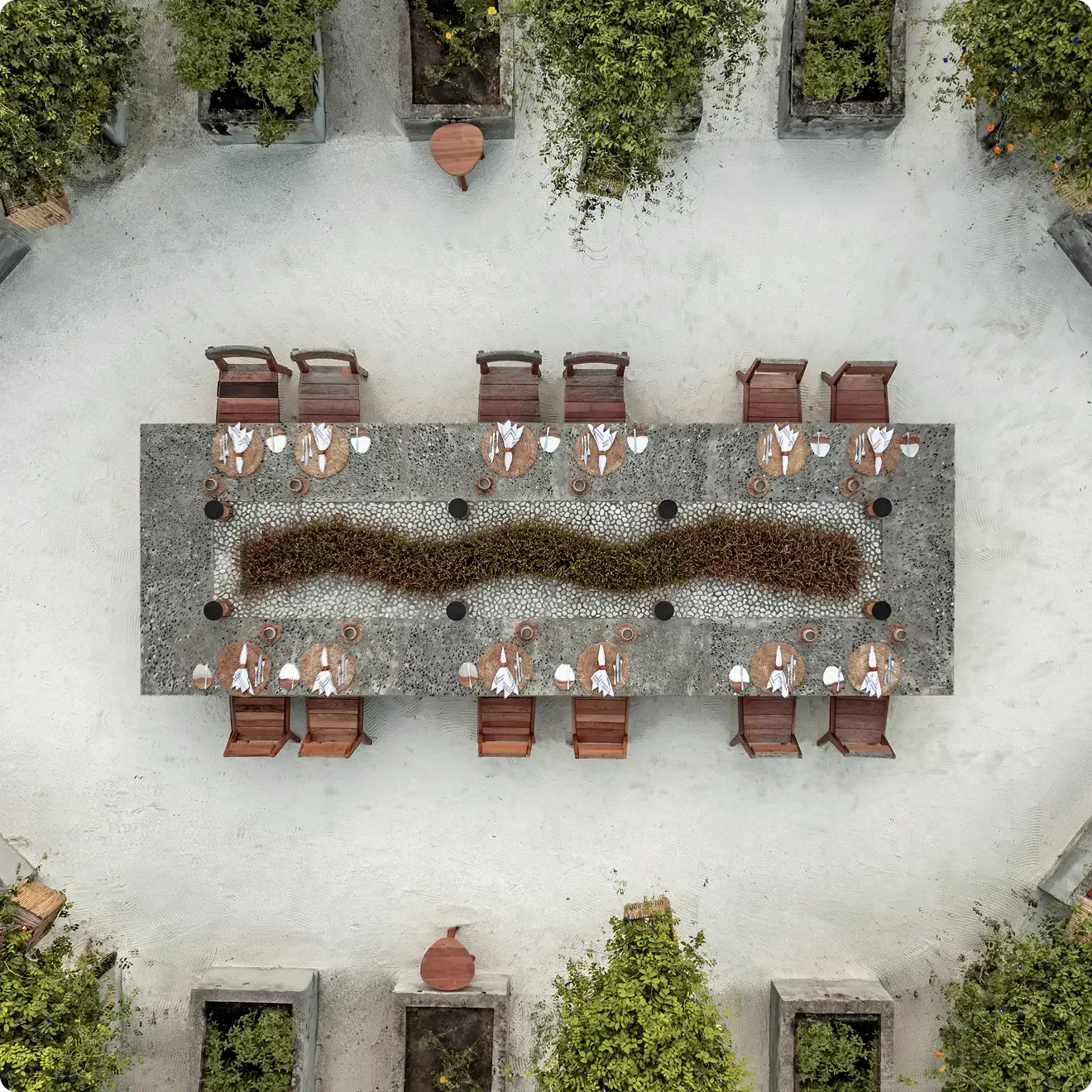
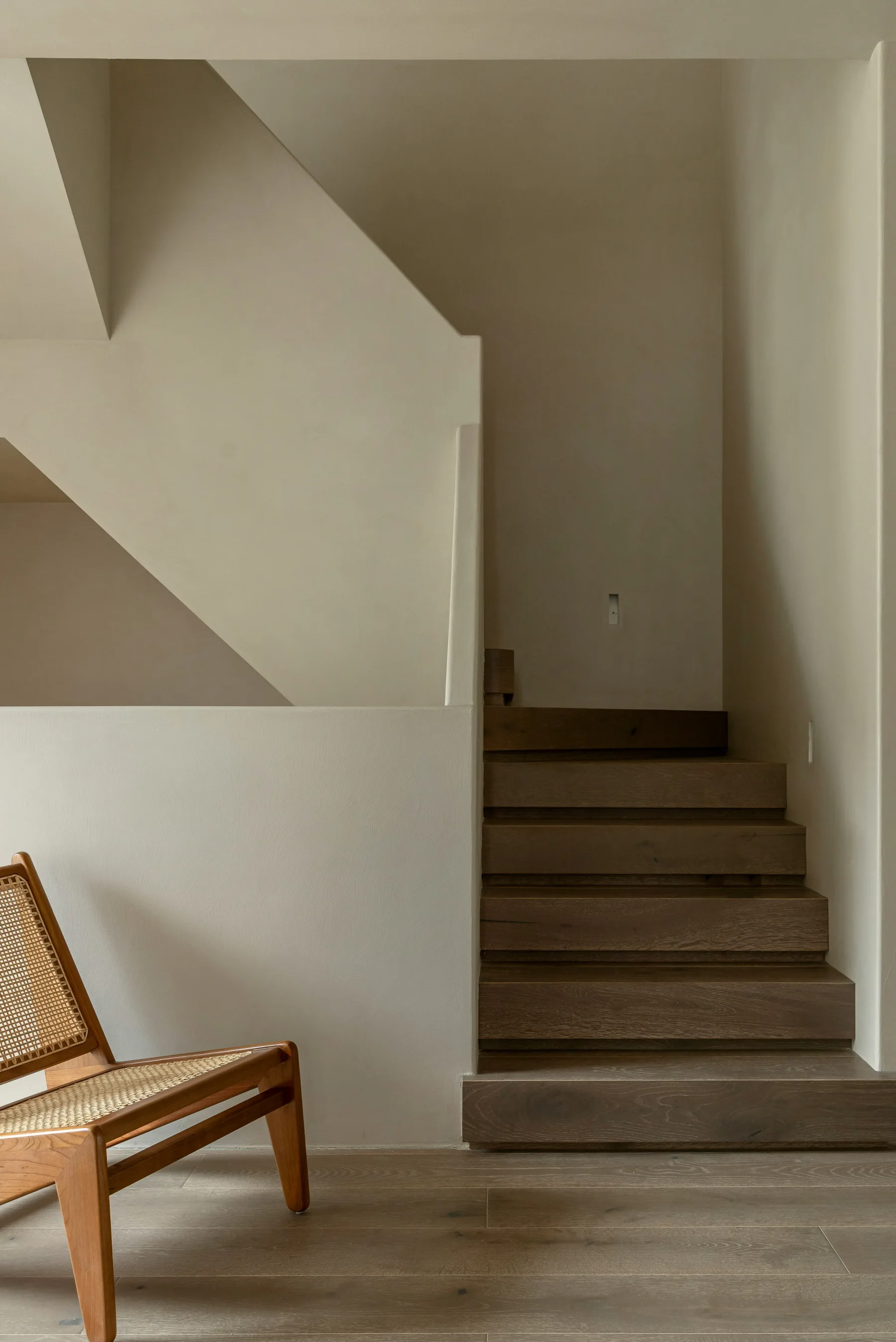
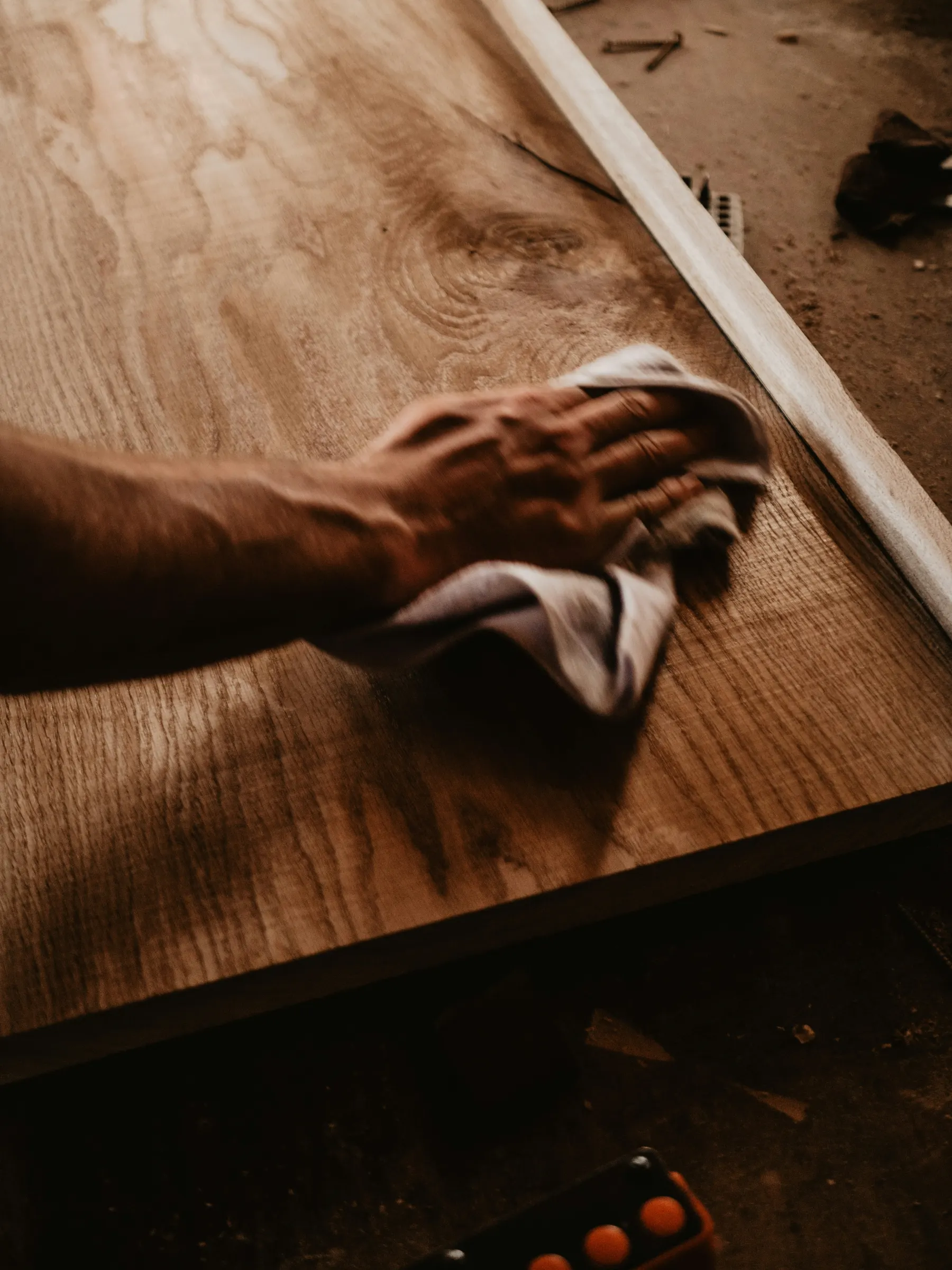
A tropical minimalist table is considered without feeling overly arranged. Natural materials bring texture and character, allowing linen, handmade ceramics, timber, woven fibres, glass and stone to sit comfortably together without the need to match.
Resist the urge to overdecorate or introduce too many artificial colours. Tropical minimalism draws inspiration from the natural world, and in the tropics, nature offers an extraordinary range of colours, textures and forms. Minimalism does not have to mean muted or dull. The tropics are among the most vibrant environments in the world, and bringing those colours to the table through foliage, seasonal flowers and fresh fruit is a wonderful way to add life and cheer.
Keep the centre of the table low enough for conversation and leave room for food to be passed around. Small details, such as natural fabrics, simple serving pieces and a few thoughtfully placed branches, can bring the setting together without making it feel overly styled.
There is also no need to make the table feel too formal. The warmth of the tropical climate lends itself to a more relaxed approach to dining, where guests can feel at ease and the occasion can unfold naturally. As the sun sets, a few candles can add warmth to the table, while the surrounding foliage and natural materials bring a sense of connection to the outdoors.
The aim is to create a table that feels welcoming and ready to be used, rather than one that looks too perfect to touch.
PinterestPinterest
Create the Ambience
Atmosphere is often created through accumulation: more flowers, more lighting, more decoration, more music.
A tropical minimalist approach works in the opposite direction.
At night, light only what needs to be seen. A few candles, a low lamp or carefully placed outdoor lighting can create warmth without illuminating every corner of the garden. Allowing the surrounding space to become darker can make the area where people are gathered feel more intimate.
Sound matters too. Music should support conversation rather than compete with it. And where possible, leave room for the sounds of the environment itself—the wind through trees, birds, water or rain.
Scent can come naturally from the food, garden, flowers or a light scented candles. The aim is not to manufacture an atmosphere, but to reveal one.
A gathering doesn't have to happen around one table from beginning to end.
In many tropical homes, architecture naturally encourages movement between spaces: from inside to the verandah, from the dining area to the garden, from the pool to a shaded terrace.
This can become part of the rhythm of the evening.
Drinks might be served outdoors before dinner. Guests might move to the dining table as the light changes. Dessert could be served somewhere more relaxed, followed by coffee or a final drink in the garden.
Serve Food That Belongs to the Climate
Food has a strong relationship with place and climate. In the tropics, where the weather is warm for much of the year, menus naturally lend themselves to lighter, fresher dishes that make the most of the ingredients available.
Think grilled seafood, fresh leafy salads, seasonal vegetables, herbs and fruit. The idea is to keep the food simple, allowing the quality and freshness of the ingredients to speak for themselves rather than relying on elaborate preparations.
Seasonality offers an opportunity to make the most of what is abundant, from freshly caught seafood to locally grown vegetables and fruit. At the same time, thoughtful hosting means considering the dietary requirements and preferences of your guests. A menu can be adapted with a few simple adjustments so that everyone feels included without compromising the overall experience.
There is no need for every dish to arrive at once or for the meal to follow a rigid structure. Sharing plates, passing dishes around the table and allowing the meal to unfold at a relaxed pace can make the occasion feel more natural and welcoming.
A beautiful meal doesn't need to be complicated. Often, the best approach is to use fresh, seasonal ingredients, prepare them well and serve them in a way that encourages people to slow down and enjoy the company around them.
The Art of Minimal
Hosting like a tropical minimalist is not about having less for the sake of it, but knowing what is worth keeping. When the landscape, the materials, the food and the setting are given room to speak for themselves, there is little need to add much more.
Ultimately, it is about creating an environment where people feel comfortable enough to settle in, enjoy the food and stay a little longer. Because the best gatherings are rarely remembered for how perfectly the table was styled, but for how good it felt to be there.